 Live Science Plus





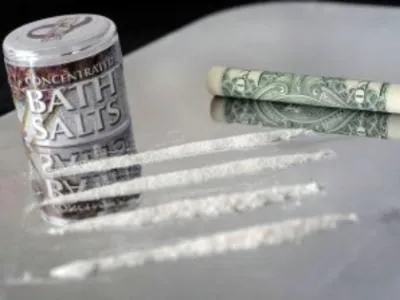
"Bath salts," the recently popular stimulant drugs made with synthetic chemicals, may be more addictive than methamphetamine, one of the most addictive drugs of abuse, a new study on rats suggests.
In experiments, rats worked much harder to get an additional dose of the bath-salt compound methylenedioxypyrovalerone (MDPV) than they did to get an additional dose of meth: The rats pressed a lever an average of 600 times to get the MDPV compared with an average of 60 times to get the meth.
Article continues belowThe findings suggest that MDPV poses an even greater risk of abuse than meth does, the researchers said.
"MDPV is more effective than methamphetamine — it's rewarding, and more pleasurable to the animal," said study researcher Michael Taffe, a psychologist at the Scripps Research Institute.
Although rodent studies don't always translate to humans, Taffe said "the drugs that are readily self-administered by rats tend to be the compounds that have abuse liability in humans,"
MDPV compounds in bath salts are derived from cathinone, a stimulant ingredient also found in a recently banned plant called khat. For centuries, khat leaves have been used as a recreational drug in eastern Africa and the Arabian Peninsula.
In the 2000s, synthesized derivatives of cathinone emerged in several countries, including the United States and Canada, and were sold over-the-counter before they were banned.
MDPV, like many other stimulants, affects three of the major neurotransmitters in the brain: dopamine, noradrenaline and serotonin. Molecules of the drug attach themselves to the proteins in the brain that clear up the excess neurotransmitters and, therefore, disrupt brain systems that control mood, pleasure, movement and cognition.
People who have used the drug report common stimulant effects — euphoria, increased physical activity, an inability to sleep and decreased appetite — as well as a craving for more use.
In the study, some rats received infusions of meth, while others received MDPV. The animals learned that pressing a lever would release a dose of the drug. When their supply was cut, they kept pressing the lever and were sometimes rewarded with more.
The dose of MDPV to which rats started responding was markedly lower than that of meth, suggesting the bath-salt compound is more potent and effective in changing the rats' behavior.
But MDPV is only one of the many derivatives of cathinone, Taffe said, and the researchers would like to become able to predict whether any newly introduced drug has high risks of toxicity or abuse.
While designer substitute cathinone drugs are made every once in a while, not all become popular or widely used. MDPV seems to have continuous popularity, Taffe said, and based on the new findings, it likely has high abuse liability.
"This looks like a drug which is here to stay," he said.
Email Bahar Gholipour. Follow LiveScience @livescience, Facebook & Google+. Original article on LiveScience.com.

