 Live Science Plus





You are now subscribed
Your newsletter sign-up was successful
Want to add more newsletters?

Delivered Daily
Daily Newsletter
Sign up for the latest discoveries, groundbreaking research and fascinating breakthroughs that impact you and the wider world direct to your inbox.

Once a week
Life's Little Mysteries
Feed your curiosity with an exclusive mystery every week, solved with science and delivered direct to your inbox before it's seen anywhere else.

Once a week
How It Works
Sign up to our free science & technology newsletter for your weekly fix of fascinating articles, quick quizzes, amazing images, and more

Delivered daily
Space.com Newsletter
Breaking space news, the latest updates on rocket launches, skywatching events and more!

Once a month
Watch This Space
Sign up to our monthly entertainment newsletter to keep up with all our coverage of the latest sci-fi and space movies, tv shows, games and books.

Once a week
Night Sky This Week
Discover this week's must-see night sky events, moon phases, and stunning astrophotos. Sign up for our skywatching newsletter and explore the universe with us!
Join the club
Get full access to premium articles, exclusive features and a growing list of member rewards.
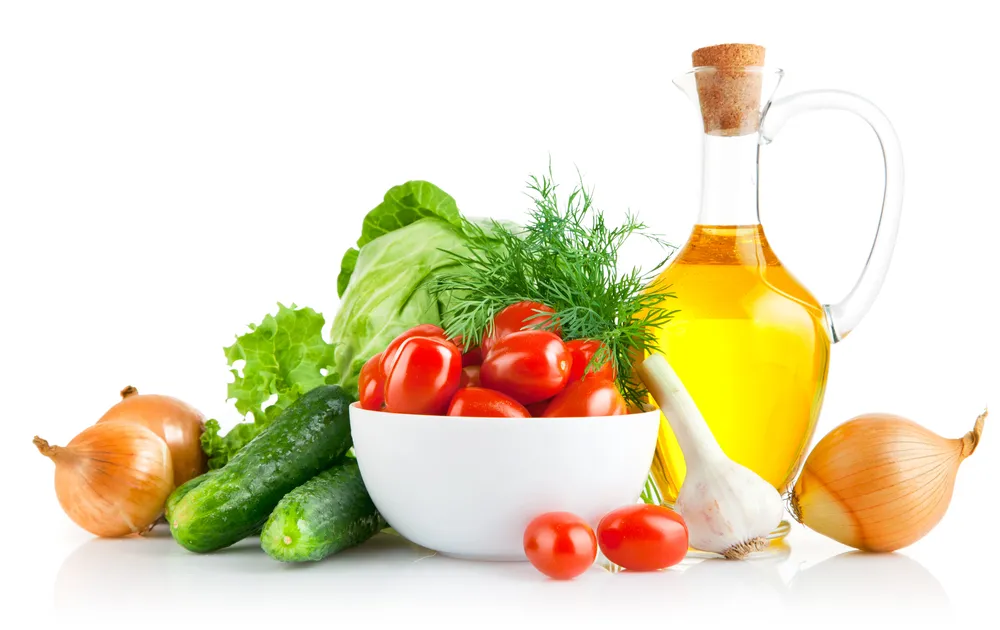
Putting olive oil on your veggies may bring health benefits that aren't found when the oil is drizzled on other foods, new research in mice suggests.
Olive oil's unsaturated fat reacts with certain compounds in vegetables to form a third compound that can reduce blood pressure, the researchers found.
The findings may explain why the Mediterranean diet, which is high in both olive oil and vegetables, appears to lower blood pressure and prevent heart disease, the researchers said.
When olive oil and vegetables are digested together, the conditions in the stomach provide an environment for the fatty acids to react with nitrogen compounds in the veggies, and form compounds called nitro fatty acids, which have been shown to keep blood pressure in check in animals, according to the researchers. [7 Foods Your Heart Will Hate]
The scientists used mice to investigate how nitro fatty acids may lead to reduced blood pressure, looking specifically at whether the compounds inhibited an enzyme that contributes to high blood pressure.
The animals in the study had high blood pressure, and were given olive oil omega-6 fatty acids along with sodium nitrite, to mimic components of a Mediterranean diet, for five days.
The results showed that the diet increased the level of nitro fatty acids in mice, and lowered their blood pressure.
The evidence was strengthened by the fact that a subgroup of mice that were genetically modified, and were resistant to the inhibitory effects on the enzyme, were found to maintain their high blood pressure despite having had the same diet, according to the study.
The Mediterranean diet includes unsaturated fats found in olive oil, fish and nuts, as well as vegetables like spinach, celery and carrots that are rich in nitrogen compounds.
Despite being high in fats, which might increase the risk of heart disease, the Mediterranean diet seems to prevent heart disease, the researchers said. This may be because fats are eaten together with green leafy vegetables and result in producing nitro fatty acids, they said.
Nitro fatty acids have been detected in the blood and urine of people and animals, and have been shown to relax blood vessels and reduce inflammation, the researchers said. One of the study researchers is a founder of a company, Complexa Inc., which is developing drugs based on nitro fatty acids.
The new findings suggest that the protective effect of the Mediterranean diet on the heart comes in part from the nitro fatty acids, and through inhibiting the enzyme that boosts blood pressure, the researchers said.
The researchers detailed their study today (May 19) in the journal Proceedings of the National Academy of Sciences.
Email Bahar Gholipour. Follow us @LiveScience, Facebook & Google+. Original article on Live Science.

