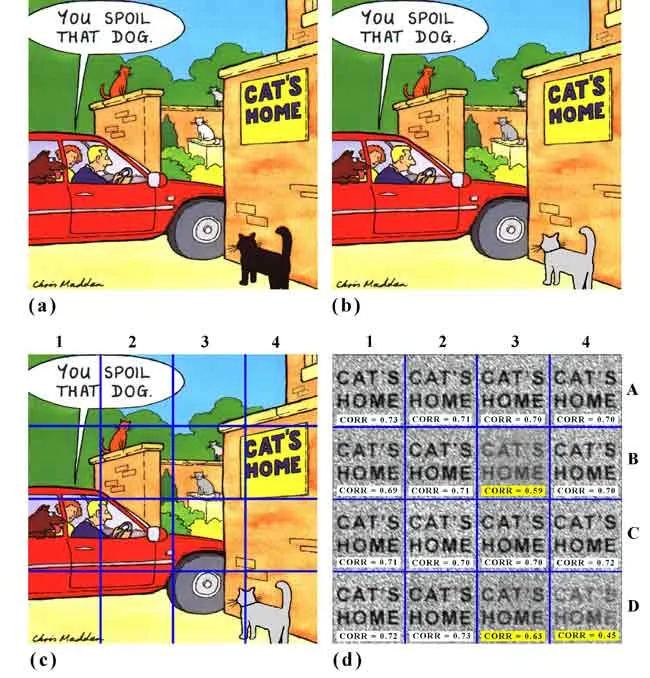
With advances in computer software making it easier and easier to alter photographs, researchers have devised a way to encode digital images to detect frauds.
The new technique embeds a computer generated hologram (CGH) into an image. Usually a simple word or picture, the hologram hides in the "noise" – the random pixel-to-pixel variations that your eye usually glosses over.
To see the CGH, a numerical code is needed to reconstruct it from the image file. In this way, the CGH acts like an invisible "watermark" – even the slightest change to the original picture will destroy the hologram.
Latest Videos From
This watermark could be used by defense agencies wanting to protect satellite images from manipulation or by media organizations wanting to verify a picture's authenticity.
"A newspaper buying a photo from a freelancer could then check for a watermark to confirm that it hasn't been tampered with to make it more newsworthy," said Lorenzo Cozella from the University of Roma Tre in Italy.
To prevent someone from doctoring an image and then correcting the CGH, Cozella and his colleagues have a way to encrypt the watermark. Therefore, only those who have the secret "key" can actually extract the hologram from the image to see it.
Besides authenticating photos, the system could protect fingerprint records and medical scans, facilitating the storage and transfer of this information for court cases and other legal proceedings.
The watermarking method is described in the latest issue of the Journal of Optics A, from the Institute of Physics.
Related Stories

 Live Science Plus