











'You start painting pictures of squirrels twirling their mustaches': A biologist on whether animals can lie
Writer Olivia Maule spoke with biologist James O'Hanlon about his book "Liars, Cheats and Copycats." In it, he explores deception across the animal kingdom and asks whether any of it amounts to lying.

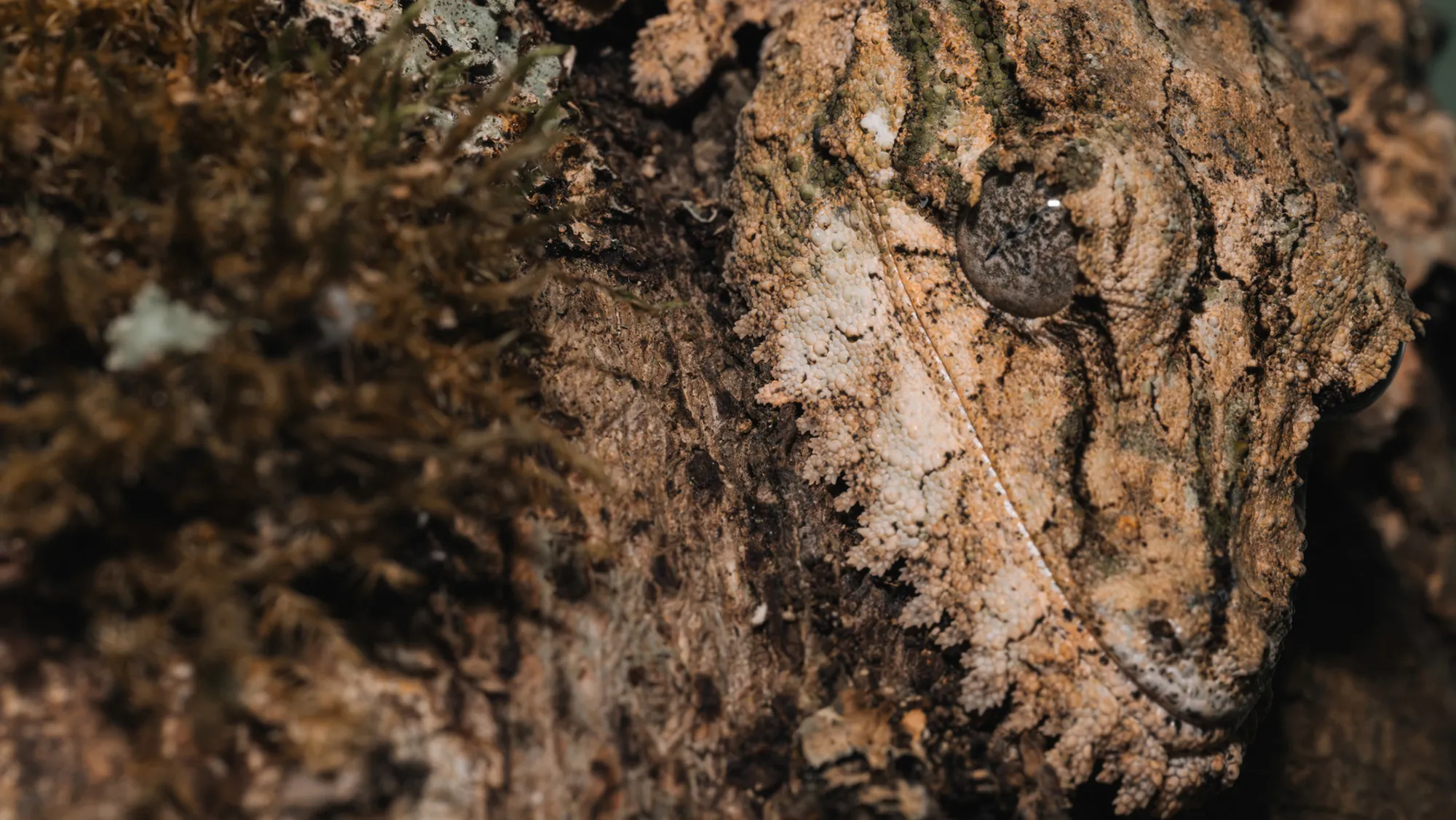
Most deception in nature happens without much awareness from the creature involved. From a moth that has evolved to look like a hornet to orchid mantises that mimic flowers to lure in pollinators, deception is part of these animals' nature. But in his book "Liars, Cheats and Copycats: Trickery and Deception in Nature" (Columbia University Press, 2026), biologist James O'Hanlon turns to tactical deception aimed at manipulating what another animal believes — and whether we can consider this as lying.
Live Science spoke with O'Hanlon about his book, and why so many scientists are reluctant to say "yes, animals can lie."
Read an excerpt: Can animals lie? This sneaky bird might be proof.

James O’Hanlon is the author of "Liars, Cheats, and Copycats: Trickery and Deception in Nature." He is an award-winning science communicator. He has published more than thirty academic papers, and his popular science writing has appeared in ABC News (Australia), Australian Geographic, The Conversation, and Biosphere Magazine. He is the author of "Eight-Legged Wonders: The Surprising Lives of Spiders" (2024).
Olivia Maule: The chapter opens with a moment from a talk you gave, where a woman at a senior citizens' club asked you a question about orchid mantises that left you stumped: "How does the mantis know to look like a flower?" Why did that moment stick with you enough to open the chapter with it?
James O'Hanlon: Because it was such a simple, straightforward question that I couldn't give a simple, straightforward answer to. At the time, I was thinking about what's going on in the brains of the animals I was looking at — does a camouflaged animal actually know it's camouflaged? Does an insect that looks like a leaf know what a leaf even is?
And it got me thinking: they don't need to. This stuff just sort of works because it works. That's a completely different type of deception to the other things dealt with in this chapter, which is: Do animals actually know that they can lie? Can they intentionally deceive, like we can?
OM: So would you say you have an answer to that question now? And if so, what would it be?
JO: If I had to answer, it would be yes. It looks like it. But scientists are paid to be pedantic, so it's always going to be a "yes, but" or a "possibly." There's a ton of behaviors that look like animals can lie, and they're really good at it, but with any type of science, we're never going to know for certain what's going on in their brains. It's a best-guess situation.

The Pink Orchid Mantis (Hymenopus coronatus) is an insect that uses camouflage as a form of protection in the wild.
OM: How would you help readers hold those two ideas at once — that this is genuine deception in an evolutionary sense, but not necessarily lying in the way we mean it as humans?
JO: When we talk about lying in humans, there's a value judgment attached. We're judging each other on whether we're good or bad people, doing right or wrong things. We kind of have to relax that judgment a bit when we're talking about other animals.
I guess it becomes an ethical question — we look at deception as being right or wrong, morally good or bad, and that's a very human-centric way of thinking. Ethics and morals are things we've developed to help us get along in our own societies. Who knows what's going on in animal societies?
There's an example in the book of golden snub-nosed monkeys that use deceptive alarm calls to scare off other members of their group and steal their food. After a while, those monkeys start to get ignored, and the group stops responding to their calls. So maybe there is some sort of animal-society rules and regulations keeping lying in check. Maybe. We'll see.
OM: I do want to ask about the chimpanzee study, in which chimpanzees intentionally misled competitive handlers to boxes without food, and compare it to the 2017 dog study, where dogs learned to mislead handlers much faster than the chimps did. What did that result do to the assumption that big brains equal better lying?
JO: There's always been this idea that lying is a really cognitively complex task — you need the brains not just to realize what's going on in the real world but to imagine a false possibility, and then to describe that false possibility as if it were real. We talked that up as something you need big brains to do, and there was also a bit of patting ourselves on the back for being such smart animals — maybe we lie a lot because we're such smart animals. But the more we learn about animals and what they're capable of, the more we realize they can do so much more than we thought was possible with the brains they've got.
OM: Does that suggest lying is less about raw intelligence and more a byproduct of needing to survive in a group?
JO: As far as all the examples of tactical deception in the book that look like they're intentional, they all, or mostly all, come from social animals. We don't seem to see it in solitary animals. That's a big sign that maybe it's something that's evolved because individuals can exploit it in a social setting. But it's still such early days, so it's hard to say for definite how different levels of sociality, and how bonded individuals are within groups, correlate with more deception.

Tiger stripes are a type of camouflage.
OM: Could you elaborate on the distinction between deception and something like the camouflage you introduce in the book with the tiger's stripes?
JO: Compared to the intentional deception we've been talking about, things like camouflage still work regardless of whether the animal doing it is aware of it or not. The idea behind lying and tactical deception is that it only works because it's intentional — there's some sort of choice to do it.
Whether the animals are aware of that choice is another question. Think about the way we do it as humans — are we always aware of it? Whenever your friend asks whether you like their new haircut and you just go, "Yeah, it's great," you don't really think about the fact that you're probably lying. It's just part of our social norms. So it becomes a very blurry gray area very quickly.
OM: It sort of boils down to the choice of it all — whether they can choose to do it or not, which raises the question of whether it's conscious or unconscious.
JO: It's tricky, because as soon as you start talking about it being a conscious decision these animals make, you start painting pictures of squirrels twirling their mustaches, giggling at how evil they are for pretending to hide nuts. And you start to think, maybe this isn't the right exact way to think about lying and deception.
OM: The drongo — a bird renowned for its ability to deceive meerkats — doesn't just have one trick, it cycles through different alarm calls and borrows calls from other bird species. Does that put it in a different category of liar than squirrels or monkeys, or is it the same trick with a different toolbox?
JO: It could just be the same trick with a different toolbox. It's essentially doing the same thing as the golden snub-nosed monkeys we were talking about before. But birds are incredible singers and have very flexible call structures, and there are tons of birds that can mimic other birds. Maybe you just pair that ability with this deception adaptation, and it looks a bit different, but it's the same kind of trick.
OM: Do you think these behaviors are inherited, or just innate characteristics of the drongos themselves?
JO: I don't know — I'd be interested to find out. The evolutionary aspect would be that the ones who can do it get more food and are better able to survive and reproduce. Whether they learn it from their parents, it's entirely possible. We know from birds in general that they learn calls from their parents and their social groups, and there are even studies showing birds will start learning calls while they're still in the egg, listening to their parents' calls. So it's entirely possible they learn this trick socially, as far as I know.

Male cuttlefish can change their body pattern to trick competing suitors.
OM: In writing this book, what did you find is the best way to approach understanding animal behavior as it relates to human traits like lying or deception?
JO: I think there's still a little bit of baggage from old-school thinking, that you need bigger brains to be deceptive and tricky in this way, and there are still people who think it must be things like the higher apes and great apes that are capable of this stuff.
As soon as you start studying that in something like an invertebrate, it's really hard to get the idea out there — other scientists will come back and say, "No, that couldn't be possible, this must be some other type of behavior, or it just looks like tactical deception, but it's not." This happened with the researchers who did the work on cuttlefish that change one side of their body to look like a male and the other to look like a female — there was a lot of resistance to that idea, seemingly just because it was a cuttlefish, this little invertebrate, so it couldn't possibly be capable of such cleverness. But as far as the actual evidence goes, and what we can see, it's really no different from what we see in these big-brained mammals, so why not assume the same thing is going on?
A lot of it comes down to the culture and practice of science, and the people doing the science. We're supposed to be as objective as possible, but we're still humans, we're still animals. It takes a while for ideas to change.
OM: Is there a risk that this caution has become its own kind of bias, where we assume human specialness by default until proven otherwise?
JO: Yeah, definitely. It's important, as part of scientific practice, to be as objective as possible, and as a general rule, to not anthropomorphize. But at the same time, we're just animals too — we're just another one of the great apes. We share characteristics with lots of different animals, so it's not a huge stretch to think that what's going on in our brains is also going to be similar to what's going on in other animal brains.
It's just a question of when we apply that kind of thinking, and when it's useful or not. Something similar happened in the field of understanding pain in animals — scientists studying this were always trying not to anthropomorphize, not to assume animals experienced pain the way we did. Then, the more we understood it, it became quite clear that they probably did, and it almost became an ethical question to stop with the anti-anthropomorphizing and instead go, no, we know what pain feels like, we can say that.
We're never going to be able to see what's going on in their brains, but that doesn't excuse us from recognizing what's going on. So I think it became okay not to anthropomorphize but to recognize the similarities between humans and other animals, as opposed to always hinging on the differences between us.
Exclusive to Live Science Pro
- This psychologist has a new theory for why orcas keep attacking boats
- Photojournalist Steve Winter on his iconic Hollywood puma image, the illegal tiger trade and having a black panther knock on his door
- 'The Russians were the problem in the end': Sailor Matt Rutherford on being intercepted by the FSB while attempting to circumnavigate the Arctic Ocean solo
OM: At the end of the chapter, you say that if you buy a scientist a few drinks, they'll eventually admit that animals can lie. I obviously can't buy you a drink over email, so I'll just ask you directly — do you think animals can lie?
JO: Yeah. I'll give a straightforward yes, because I can.
You need to get scientists out of their professional mindset, where they're trained to give the most correct answer that they can. And yes is a bit of a broad-stroke answer for a scientist when they're in professional mode, which is why you need to get them out of the lab and out to a bar or a cafe, and get them talking in human terms again.
OM: What would you say is your favorite example in the book — what are you most excited for readers to walk away with?
JO: I'll go with the cuttlefish example — the one where a male cuttlefish will put male color patterns on one side of its body and female patterns on the other, to trick other male cuttlefish. It might be my favorite because, as a young student, I worked on this particular species of cuttlefish. We were studying them, watching all of their crazy color-changing abilities, and just wondering what on earth they must be talking about, what was going on there. Then, years later, seeing the aforementioned research come out was this sort of lightbulb moment — that's what I was watching them do all along. I think that has a personal connection for me. I spent so much time looking at these creatures, being mesmerized by what they were doing, with no idea what was going on. So it was great to see scientists come in and figure it out, and answer those questions.
This interview has been condensed and edited lightly for clarity.
Help us improve Live Science Pro: We're always trying to make our content better. Leave us feedback about Pro here.

To understand how these creatures swindle their way to survival, Liars, Cheats, and Copycats reveals the science behind camouflage, mimicry, and masquerade. Taking readers on a journey from tropical rainforests to the darkness of deep ocean trenches, James O’Hanlon explores how animals and plants use deception to avoid predators, lure in prey, and even reproduce.

Olivia Maule is a former Live Science intern and science journalist whose beats include space, biotechnology and the environment. She holds a B.A. in biology and a B.S. in anthropology from the University of Florida and completed a master's degree in science communication at U.C. Santa Cruz. A 2025 AAAS Mass Media Fellow, she wrote stories and produced videos during a summer at El Nuevo Día, Puerto Rico's largest newspaper, and has written for Eos, Mongabay, Science magazine and Stanford Report. Olivia is a native Spanish and English speaker.
You must confirm your public display name before commenting
Please logout and then login again, you will then be prompted to enter your display name.