















New tech allows parents to 'score' IVF embryos for desirable traits — and it's in desperate need of regulation
Companies now offer polygenic embryo selection to prospective parents undergoing IVF. But the technology is dangerously underregulated.


"If I give you a diagnostic tool that lets you end up with a kid that has a three times higher chance of getting admitted to MIT, I think people are going to be interested."
Although it sounds like a line from a sci-fi movie, this is actually a quote from Steve Hsu, a physics professor at Michigan State University and co-founder of Genomic Prediction, a company that offers parents a new technology called polygenic embryo selection.
In the 1997 film "Gattaca," the kind of thinking reflected in Hsu's pitch led to a dystopia in which children were conceived in laboratories and society was divided into genetic haves and have-nots. When the film first came out, the reproductive technologies it depicted were science fiction — but today, they are rapidly becoming scientific realities.
Companies like Genomic Prediction, Orchid, Herasight, and Nucleus now offer polygenic embryo selection, a technology that sorts embryos by their genetics and predicts the eventual traits of babies-to-be. It is not the same as an older technology that screens embryos for chromosomal abnormalities and specific, single-gene genetic diseases, such as sickle cell and cystic fibrosis. By comparison, polygenic embryo selection aims to give prospective parents insight into a much wider range of traits, ranging from intelligence to heart disease to depression.
Hsu thinks this is just good business, and he's right –– in survey studies, many prospective parents have expressed interest in utilizing the technology. The question is whether we should let him sell it.
These tests rely on polygenic scores, summaries of thousands of tiny genetic influences, to try and predict the likelihood that a given trait will manifest. Polygenic scores are valuable tools for researchers seeking to better understand the influence of genetics on various diseases. But the predictive accuracy of existing polygenic scores varies substantially from trait to trait, and they are typically unreliable guides for predicting a person's future — let alone an embryo's.
Researchers have discovered that many of the supposedly genetic effects summarized in existing polygenic scores aren't biological at all. Rather, they reflect the fact that people who are genetically alike tend to also live in similar regions and share social and economic circumstances. Polygenic scores also don't work well for people who aren't represented in the training data — namely, people who aren’t of European ancestry.
Get the world’s most fascinating discoveries delivered straight to your inbox.
But that isn't stopping companies from marketing their service as the responsible way to make babies.
Potential consequences of polygenic embryo selection
Despite their well-known scientific limitations, using polygenic scores to select embryos could fuel the belief that children conceived this way are inherently "better" than those conceived without them — akin to what we saw in "Gattaca."
Parents may have higher expectations of polygenic embryo-selected kids. Polygenic embryo-selected individuals might seek out potential spouses who have similarly been selected for. Meanwhile, those born without selection could face lower expectations, discrimination and the stigma of being deemed genetically inferior.
The ways in which we perceive one another, however unfounded, have a profound influence on our social interactions. There is, for instance, a long and disturbing history of using genetic science to legitimize harmful and inaccurate views of race and instigate racial violence.
Eventually, polygenic embryo selection will likely become more accurate at predicting traits as the genomic databases used in medical research grow larger and more diverse — though just how accurate will depend on the trait. That makes the current lack of regulation around the technology all the more troubling.
There are no agreed-upon standards for the threshold at which the underlying science will be accurate enough to justify its use in embryo selection. Little compels companies to be transparent about the specific scientific studies that their services are built upon. Misleading advertising faces few repercussions in practice. There's a reason the leading embryo selection companies are based in the United States: We don't have rules.
Meanwhile, other developed nations have taken a far more cautious regulatory approach. Countries like the U.K., Germany and France have banned polygenic embryo selection outright –– although loopholes still exist. These nations recognized early that leaving such consequential technology to market forces risks creating the exact dystopia "Gattaca" warned us about.
Prospective parents who suffer from conditions such as Crohn's disease or schizophrenia may see embryo selection as a way to reduce their child's chances of enduring a similar fate. It's difficult to justify avoiding embryo selection in these cases. But without a robust regulatory apparatus, screening for such conditions could inadvertently open the door to selection for far more troubling traits: intelligence, athleticism, or even skin tone.
At least two companies — Nucleus and Herasight — already offer embryo testing for intelligence.
Notably, as it stands, the technology is unaffordable to most Americans. Polygenic embryo selection requires undergoing IVF. A single IVF cycle costs tens of thousands of dollars and is not covered by Medicaid. Genetically testing each embryo prior to implantation adds thousands more to the overall price tag.
Given the wealthy can access the technology, as the effectiveness of polygenic embryo selection improves, existing social inequalities between rich and poor Americans could turn into biological ones.
RELATED STORIES
Affluent Americans are already into the idea of utilizing embryo selection to "optimize" their best baby. Millions of dollars have been pumped into the industry from tech elites like Alexis Ohanian, Reddit co-founder and husband of the tennis superstar Serena Williams; and Brian Armstrong, co-founder of Coinbase. Notable clientele of polygenic embryo selection include OpenAI's Sam Altman and Tesla's Elon Musk.
Without regulation, key ethical and social questions raised by polygenic embryo selection will go unanswered: What kinds of traits should parents be allowed to select for? Could unreasonable expectations be placed on the children who were conceived with the technology? Are we quietly creating a genetic arms race that encodes existing social and economic inequalities into our very DNA?
Allowing companies to offer embryo selection will tilt social competition even further in favor of those already ahead. Regulation won't stop scientific progress, and in fact, it is essential for ensuring that progress benefits society rather than dividing it.
Opinion on Live Science gives you insight on the most important issues in science that affect you and the world around you today, written by experts and leading scientists in their field.
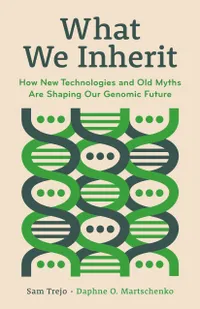
In "What We Inherit," Sam Trejo and Daphne Martschenko debate both the risks and the opportunities posed by such new technologies as at-home genetic tests and polygenic embryo selection — all while engaging in a wide-ranging dialogue on ideology, biology, and social inequality.

Sam Trejo is assistant professor of sociology at Princeton University, where he holds the Charles H. McIlwain University Preceptorship. He is a co-author of "What We Inherit: How New Technologies and Old Myths Are Shaping Our Genomic Future" (Princeton University Press, 2026).
You must confirm your public display name before commenting
Please logout and then login again, you will then be prompted to enter your display name.