


Good morning, sunshine

Welcome back, science fans. We’re here with news of fresh geomagnetic storms, as Earth was hit by one solar flare last night and many more — alongside a coronal mass ejection — appear to be in the offing.
Coronal mass ejections (CMEs) are large, fast-moving clouds of magnetized plasma that occasionally get spat out into space by the sun alongside solar flares — powerful explosions on our star's surface triggered when solar magnetic loops snap in half like an overstretched elastic band.
Last night’s flare was a surprise, spaceweather.com reports, coming from a new sunspot on the sun’s northern surface that appeared to be harmless until it exploded. The flare ionized the Earth’s atmosphere and caused a radio blackout over Australia.
With multiple more sunspots appearing on the sun’s surface, it could be a busy week for solar storms, potentially bringing more disruption in space and auroras here on Earth.

Solar flares corrupt airplanes

An Egyptair AIrbus A320 SU-GCC
How much disruption can space weather really cause? Surprisingly, the answer is a lot — just ask Airbus.
Solar eruptions can grow to truly catastrophic scales, having the potential to wreak havoc on electrical systems and Earth-orbiting satellites.
Even aircraft aren’t immune from geomagnetic storms, as news broke over the weekend that aircraft manufacturer Airbus has recalled thousands of its A320 passenger jets owing to a fault that enabled intense solar radiation to "corrupt data critical to the functioning of flight controls", Gizmodo reports.
The A320 is the most delivered jetliner in history, and the recall has severely impacted some airlines such as Colombia’s Avianca, which said the issue had affected 70% of its fleet.
And as solar activity continues to unexpectedly ramp up in its activity for the next few decades, the issues posed by it are only likely to get worse.
Live Science roundup
Here are some of the best stories Live Science published this morning and over the weekend:
- 'Potentially hazardous' asteroid 2024 YR4 was Earth's first real-life planetary defense test
- Roman sun hat: A 'very rare' 1,600-year-old brimmed cap that may have protected a Roman soldier from Egyptian sandstorms
- Antarctica's Southern Ocean might be gearing up for a thermal 'burp' that could last a century
- Time may be a psychological projection, philosopher argues
Chernobyl mushroom could be feeding on radiation

Onto terrestrial radiation now, and there are intriguing reports doing the rounds that a fungus may be using the radiation in the Chernobyl exclusion zone as food.
The fungus is called Cladosporium sphaerospermum and the strange process it could be using to mop up Chernobyl’s radiation is called radiosynthesis, which deploys melanin to metabolise ionising radiation, the BBC reports.
The process of radiosynthesis remains hypothetical for the time being, but it could stand as a potential new foundation for life on Earth.
That means that instead of photosynthesis, the fungus may be thriving off the exploded fissile material of Ukraine’s dark star. (Chernobyl is Ukrainian for wormwood, a prophesied star in The Book Of Revelation that falls to Earth to poison the waters).
Life in the zone
And while we’re at it, mushrooms aren’t the only form of weird life thriving in Chernobyl’s exclusion zone — there are also worms that appear unscathed by the radiation; the feral descendants of pet dogs; and an endangered species of wild horse whose numbers have exploded.
Humans have also been making lemonade, or better to say an apple-based moonshine called Atomik, from ingredients grown within the exclusion zone.
If that sounds dangerous, only small parts of the zone are dangerous radiation hotspots, and tours through it ran frequently until Russia’s 2022 invasion of Ukraine.
Clam-plane supernova

What does a nuclear explosion in space look like? As it turns out, not perfectly spherical, Live Science contributor Shreejaya Karantha writes.
New observations taken by Chile’s Very Large Telescope (VLT) have revealed that, as massive stars run out of fuel to fuse and burst, their first light isn’t emitted in all directions equally, but along a shockwave stretched along one axis, much like a clam.
You can read the full story here.
Half the world away

Over the weekend, Kristina wrote a story about when modern humans arrived in Australia, which has proven to be a real hit with our readers.
New genetics research published in the journal Science Advances concluded that humans began to settle northern Australia by 60,000 years ago, potentially breeding with archaic humans along the way, including the "hobbit" Homo floresiensis.
Humans had to invent and use watercraft in order to reach Australia, so their arrival Down Under was an impressive feat. Researchers have long debated their arrival date, but with the new research, that debate may finally be settled.
Read the full story here.

Tip of the iceberg

More than 500 scientists have signed an urgent climate declaration stating that our "planet's future hangs in the balance" and "if we wait, it will be too late" to address climate tipping points, according to the University of Exeter in the UK.
Tipping points are potential "points of no return" within key Earth systems beyond which lasting changes to the environment occur. The new declaration warns that global warming will soon exceed the 1.5 degrees Celsius (2.7 degrees Fahrenheit), which puts us in the "danger zone" of breaching multiple tipping points.
The declaration comes in the wake of an underwhelming COP30 agreement that had no clear mention of fossil fuels in the final text. It was a decade ago at COP21 that world leaders adopted the Paris Agreement, which promised to limit global warming to preferably below 1.5 C and well below 2 C (3.6 F).
This isn't the first time scientists have issued a stark warning about climate change, and so long as humanity fails to comprehensively address the matter, it won't be the last.
Comet 3I/ATLAS 'ice volcanoes'

Comet 3I/ATLAS appears to have spiral jets shooting off its surface, which the authors of a new preprint interpret as a kind of cryovolcanism.
A series of cryovolcanoes, sometimes nicknamed "ice volcanoes," erupted on the surface of comet 3I/ATLAS as it approached the sun, preliminary research suggests.
I've been speaking to Josep Trigo-Rodríguez, a leading researcher at the Institute of Space Sciences (CSIC/IEEC) in Spain, who has led a preprint study about new observations of our favorite interstellar visitor.
Trigo-Rodríguez and his colleagues found that the comet could be covered in cryovolcanoes, activated by the corrosion of pristine material locked inside its core. The findings, which haven't yet been peer-reviewed, suggest that comet 3I/ATLAS is similar to icy trans-Neptunian objects — dwarf planets and other objects that orbit the sun beyond Neptune.
Read the full story here.
Russia accidentally destroys its last working launchpad

A Russian Soyuz rocket taking off from the Baikonur Cosmodrome in Kazakhstan. The sole working launchpad at the Cosmodrome became nonfunctional recently.
Tia here with news that Russia has accidentally messed up its sole working launchpad after sending astronauts to the ISS. The launchpad is actually not in Russia proper; it's the Baikonur Cosmodrome in Kazakhstan, but Russia uses it for all of its Soyuz rocket launches.
Senior writer Harry Baker has the details on why this likely happened and what it means for future Russian space launches.
You can read the whole story here.
Do dreams change as we age?

There's surprisingly little research on how dreams change as we age, but the few studies that have been done on the subject have some intriguing findings.
When I was a kid, I dreamed about jumping on a giant Swiss-cheese trampoline hidden in a secret room beneath the supermarket. Last week I dreamed about paying a very large grocery bill.
But was my more recent dream so humdrum because I'm older? Or was it simply because now I pay a lot of bills, and back then I jumped on a lot of trampolines?
Live Science contributor Abby Wilson covered how dreams change as we age in one of this week's Life's Little Mysteries.
You can read the full story here.

Solar flare could signal Northern Lights this week
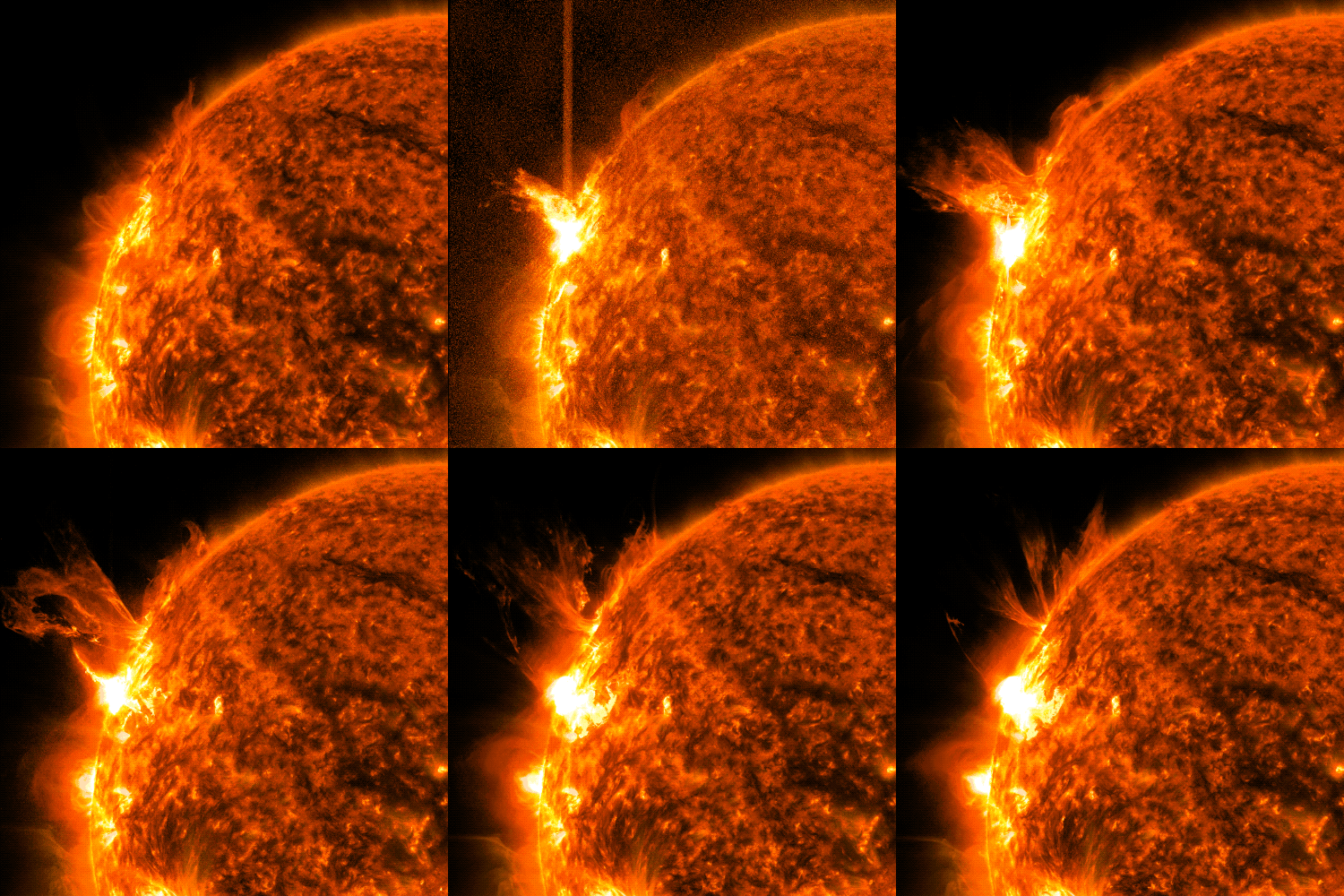
Earth could be in for another bout of bright auroras later this week.
Late Sunday night (Nov. 30), a sunspot on our star's northeastern edge erupted with a powerful X1.9-class solar flare — the most intense class of flare the sun can emit. Here, courtesy of NASA's Solar Dynamics Observatory, is what the blast looked like up close:
The Sun emitted a strong solar flare on Nov. 30, 2025, peaking at 9:49 p.m. ET. NASA’s Solar Dynamics Observatory captured an image of the event, which was classified as X1.9 class: https://t.co/cAJ3UyYL6n pic.twitter.com/aJTLGKxXXlDecember 1, 2025
Radiation from the flare quickly rushed over Earth, triggering radio blackouts across parts of Australia and Southeast Asia, according to Live Science's sister site Space.com. The explosion was also accompanied by a high-speed concentration of plasma called a coronal mass ejection (CME), though this blast of solar shrapnel was angled away from Earth and is unlikely to have any impact on our planet.That might not be the case later this week. According to the National Oceanic and Atmospheric Administration's (NOAA) Space Weather Prediction Center, a large group of sunspots is presently rotating into view, putting Earth in the firing line of forthcoming eruptions.
This particular group of coronal troublemakers battered Earth with CMEs two weeks ago, pushing the Northern Lights as far south as Florida and Mexico, and NOAA predicts a 70% chance of additional solar flares between Dec. 1 and Dec. 5.
Stay tuned for more space weather updates as the story progresses.

Earth had a secret neighbor

An illustration of the collision between Earth and Theia that may have formed the moon.
Tia here again. It's no secret that Earth's moon formed thanks to a massive collision with a Mars-size rocky body around 4.5-billion years ago. But new research suggests that this hunk of space rock, dubbed Theia, wasn't a cosmic interloper from the outer reaches of the solar system, but rather a planet that used to live next door.
That's the takeaway from analyzing samples from the Apollo moon missions, as well as meteorites and terrestrial rocks on our own planet.
Live Science contributor Sharmila Kuthunur covered the new research, which paints a picture of the chaotic first 100-million-years of Earth's history. At the time, hundreds of baby planetoids likely pinged and jostled each other in the inner solar system.
The new study clarifies certain pieces of the Earth-moon puzzle, but there are still many unresolved questions about our planet's closest companion, including why Earth and the moon have nearly-identical compositions.
You can read the full story here.
I'll show myself out
The U.S. West Coast is heading out for the evening, but we'll have tons of fresh science news when the British crew signs on.
In the meantime, we'll leave you with a classic chemistry joke.
Two atoms were sitting at a bar.
The first atom says to the second atom: "I just lost an electron."
The second asks: "Are you sure?"
First: "I'm positive."
Blast off!

Good morning, science fans! I'm launching today's news blog with, well, a launch. SpaceX sent its latest Falcon 9 rocket flying from the Vandenberg Space Force Base in California last night, Spaceflight Now reports.
The launch was part of the Starlink 15-10 mission, which adds another 27 Starlink satellites to the more than 2,800 satellites that SpaceX has already launched this year.
So all pretty pedestrian as far as rocket launches go, but they're still fun to watch. Click the video above and skip to the 30-minute mark if you want to see the rocket take off.
SpaceX has another Starlink satellite launch scheduled for tonight, this time from Cape Canaveral Space Force Station in Florida.

Aurora update
NASA captured this GIF of the sun emitting a strong solar flare on Sunday (Nov. 30).
NOAA's Space Weather Prediction Center has forecast a moderate geomagnetic storm for tomorrow and Thursday, with the potential for visible auroras across some of the northern and upper Midwest.
Yesterday, we brought you news of intense activity on the sun, including a powerful X1.9-class solar flare and coronal mass ejections (CMEs) — clouds of plasma — with the potential to clash with Earth.
CMEs can disrupt our satellites and communication systems and create auroras. In this case, the effects of a forecast CME are likely to be minor, but you may be able to see some pretty lights in the sky from New York to Idaho.
Live Science news roundup
Here are some of the Live Science stories from yesterday and today that we haven't covered on the blog.
- 'We do not know of a similar case': 4,000-year-old burial in little-known African kingdom mystifies archaeologists
- 'Cold Supermoon' 2025: Why the final full moon of the year also towers highest
- Once-in-a-century floods set to become annual events in northeastern US in the next 75 years, study finds
- A 'functional cure' for HIV may be in reach, early trials suggest
Bomb cyclone

NOAA's GOES-19 weather satellite captured this image of storm clouds over the U.S. and Canada on Tuesday.
A powerful winter storm is gripping the Midwest and Northeast, with experts expecting it to strengthen into a bomb cyclone, CNN Weather reports.
Bomb cyclones are large storms that rapidly intensify through a process called "bombogenesis." Forecasters anticipate the latest storm will reach bomb cyclone status as it strengthens and moves up the New England coast.
The widespread storm is likely to bring the first proper accumulating snow of the season to several cities, including Cincinnati, Pittsburgh and Hartford.
I vant to suck your genome

Vampire squid are mysterious, deep sea scavengers with a long evolutionary history.
Researchers are deciphering the evolutionary origins of the enigmatic vampire squid, nicknamed the "vampire squid from hell," which is neither a squid nor an octopus, ScienceAlert reports.
Vampire squid live in the dark depths of the ocean and are equipped with a cloak-like webbing between their arms. And if that isn't vampiric enough for you, they can also be blood red.
In a new study, published in the journal iScience, researchers sequenced the vampire squid genome, which was the largest of its kind and twice as big as a squid's genome.
The study revealed that the vampire squid genetic lineage predates those of squid and octopuses, offering researchers a window into early cephalopod evolution.
A mysterious jug

Two large ceramic vessels were found in an ancient grave in Sudan. The upright vessel was part of a previously unknown funeral ritual.
Researchers have discovered the first evidence of an unknown funeral ritual in a 4,000-year-old jug from a little known African kingdom, staff writer Kristina reports.
The ceramic jug was in an ancient grave in the Bayuda Desert of northeast Sudan. Inside the jug were the remnants of charred plants and wood, animal bones and insects, which the researchers believe are the remains of a funeral feast.
The grave dates back to between 2050 and 1750 B.C., suggesting the person inside was part of an early Nubian civilization called the Kingdom of Kerma, which neighbored ancient Egypt.
Read the full story here.
Closing time
We're heading home on the U.K. side, so you won't hear from me again until tomorrow. Be sure to keep checking back for more science news from our U.S. colleagues.
I'll leave you with this animal joke from Beano.
What do you get if you cross a duck and a squid?
A quacken!
A law that isn't a law

Gordon Moore described a trend he'd observed in the number of transistors that would fit on a chip over the course of time. It would become known as "Moore's law."
Tia here, with a story I wrote about a groundbreaking talk that happened 60 years ago that changed the course of technology. On Dec. 2, 1964, a director of research at a semiconductor company gave a talk to a local chapter of a professional society. He'd noticed a trend in the industry and described it that day.
Around a half-year later, that scientist, Gordon Moore, would publish a bigger piece laying out his observations. The economic and technological trend he'd described would eventually become known as "Moore's law," and it drove innovation in the semiconductor industry for more than five decades.
It's interesting to consider whether Moore's law would have had the same impact if it had a less catchy name. The "law" wasn't dictated by any physical law of nature, yet I wonder whether giving it that sense of inevitability may have also spurred the big players in the field to invest more in innovation.
You can read all about the history of Moore's law here.
Bennu's surprise

An image of asteroid Bennu, which contains a multitude of intriguing organic compounds.
NASA has released new findings from the agency’s mission to collect samples of the potential city-killer asteroid Bennu, which a spacecraft visited for more than two years during the OSIRIS-REx mission. The space rock contained the five-carbon sugar ribose — which is part of RNA's carbon backbone — as well as the six-carbon sugar glucose, which the body uses for fuel. Researchers described the latest findings from the sample return mission in a Dec. 2 paper in the journal Nature Geoscience.
In a January study, researchers described the presence of 14 of the 20 amino acids that make proteins on Earth, as well as all five nucleobases that encode genetic information.
"The new discovery of ribose means that all of the components to form the molecule RNA are present in Bennu," Yoshihiro Furukawa of Tohoku University in Japan said in a statement from NASA.
Combined, the analyses bolster the notion that space rocks could have seeded early Earth with all the raw ingredients for life. These findings bolster the "RNA World" hypothesis that suggests RNA emerged first, with DNA evolving from that earlier molecule, the researchers say.
The Lady with the Inverted Diadem

The head of the "Lady with the Inverted Diadem" as she was uncovered during the excavation.
Kristina here. Archaeologists in Greece recently found the grave of a woman who was the subject of an unusual burial ritual: Her bronze crown was placed on her head upside down. The crown has a giant rosette on the front and several pairs of lions on the back, with a curlicue border. Since lions were a symbol of the ruling elite, experts think the woman's crown was inverted to show she was no longer powerful.
You can read more about this 2,700-year-old burial here. Don't miss the gallery of bronze objects found in her grave.

Why anacondas are so massive

Anacondas are huge. A new study looks at why.
Tia here again, with a new story by contributor Skyler Ware that looks at the evolutionary history of anacondas.
The study helps answer when and why the monster snakes got so large — and why they stayed that way. It's a story with lots and twists and turns, but the long and short of it is that the anaconda's monster size is fairly unique. While other giant creatures roamed Earth in the Middle Miocene (16 million to 11.6 million years ago), most died out or got smaller over time. Anacondas, meanwhile, stayed big.
You can read all about why anacondas are still so terrifyingly large here.
Law of 'maximal randomness'

Why do objects shatter the way they do? One physicist has tried to answer that question using entropy.
Another one from contributor Skyler Ware takes a close look at a maximally annoying experience: Dropping an object and having it break into a gazillion pieces.
A physicist took a deep look at this phenomenon and found it obeys a law of "maximal randomness" — and that the same distribution of fragment sizes holds for any cohesive unit that fractures, from pieces of spaghetti to soap bubbles.
You can read all about the physics behind this phenomenon here.
Later gator!
The U.S. Live Science team is signing off for the night, but our colleagues across the pond will be back online early U.K. time. In the meantime, we'll leave you with this riddle:
Why should you never trust an atom?
Because they make up everything.
Wake up, a mystery is afoot
Good morning, science fans! Patrick here to kick off another day of our science news blog coverage. I want to start with a sea 'monster' mystery in Scotland.
Researchers have been investigating two octopus arms that washed up on an Aberdeenshire beach, BBC News reports. The arms belonged to a rare species commonly known as the seven-armed octopus, or blob octopus.
Seven-armed octopuses are one of the largest octopus species, capable of growing up to around 13 feet (4 meters) in length. Despite the misleading name, the species has eight arms like other octopuses, but males hide one of their arms, which it uses as a reproductive organ to fertilize eggs.
These cryptic creatures spend most of their life in the deep sea, leaving researchers puzzled as to how two arms came to wash up on the Scottish coast.
Virus miners

The virus miner is modified bacteriophage (illustrated here), which naturally attacks bacteria.
Researchers have genetically engineered a harmless virus that can mine rare earth minerals, New Atlas reports.
The viruses are designed to extract minerals from drainage water, and could offer a more environmentally friendly alternative to traditional methods for mining rare earth minerals, which are notoriously toxic.
A University of California, Berkeley-led team first presented their mining virus in October, publishing a study in the journal Nano Letters. UC Berkeley then released a statement about the research in November, before New Atlas reported on the discovery this week.
I've seen the New Atlas story getting attention on Reddit overnight, and as it seems pretty remarkable, I thought I'd share it with you here.
"Super-puff" planet

An illustration of exoplanet WASP-107b shrouded in gas.
New James Webb Space Telescope observations have revealed that the "super-puff" planet WASP-107b could be losing its atmosphere, Live Science contributor Elizabeth Howell reports.
The exoplanet (a planet outside of our solar system), which is around 210 light-years away, is leaking helium into space.
Researchers say this is the first time the James Webb Space Telescope has captured helium leaving this planet. The observation could help them better understand how exoplanet atmospheres behave.
Read the full story here.
Live Science news roundup
Here are some of the Live Science stories from this morning that we haven't covered on the blog:
When an AI algorithm is labeled 'female,' people are more likely to exploit it
Diagnostic dilemma: A woman got a rare parasitic lung infection after eating raw frogs
Death Valley's 'world's hottest temperature' record may be due to a human error
China has planted so many trees it's changed the entire country's water distribution
Ingredients for life detected on asteroid
NASA has found sugars essential for life in pristine samples from asteroid Bennu. We covered these Bennu samples yesterday, but this new research could have big implications for our understanding of life in the universe.
The samples contain the five-carbon sugar ribose and six-carbon glucose. Researchers had previously detected a selection of "life's ingredients" in Bennu samples, but the discovery of these bio-essential sugars completes the "inventory of ingredients crucial to life," according to a new study published in the journal Nature Geoscience.
Ultimately, the Bennu samples back up the idea that space rocks could have helped kickstart life on Earth.
When is the next full moon?

The moon will appear particularly big and bright tomorrow, provided you've got clear skies.
Look up tomorrow night and, as long as the skies are clear, you'll see the final full moon of 2025.
December's full moon, known as the Cold Moon, will be well worth looking out for as it's going to be a supermoon. This latest supermoon is set to be the second largest of the year and the third of four supermoons in a row.
The "Cold Supermoon" will rise at 6:14 p.m. EST on Thursday (Dec. 4).
You can read all about the upcoming full moon here.
Bye for now
It's that time of the day when the U.K. team signs off. As always, keep checking back for more science news from our U.S. colleagues.
I'll leave you with this chemistry joke from Reader's Digest.
What do you do with a sick chemist?
If you can't helium and you can't curium, then you might as well barium.
More evidence that shingles vaccines prevent, slow dementia

Vaccines against shingles have been tied to a lower risk of dementia in various studies.
Research out of Stanford Medicine adds credence to a mounting idea: that the shingles vaccine may lower recipients' dementia risk and even slow dementia in people already diagnosed. (Live Science covered some of this research in 2023, when it was released as a preprint.)
Shingles is caused by the same virus as chickenpox. Following a chickenpox infection, the virus weasels its way into nerve cells, from which it can later reawaken and trigger shingles.
There's evidence that this reactivation may raise the risk of dementia, while vaccination lowers the risk by keeping the virus in a dormant state. That exact mechanism has yet to be confirmed, but the correlation is supported by several large medical-record studies, including one out of Wales and another out of Australia.
These studies suggest that shingles vaccination may help prevent dementia — and in addition, giving the shot to people already diagnosed with dementia may slow the disease. That's according to new data from the same Stanford group that found dementia patients given the vaccine had a lower death rate in the following nine years than those not given the shot.
"This really suggests the shingles vaccine doesn't have only preventive, delaying benefits for dementia, but also therapeutic potential for those who already have dementia," the senior study author said in a statement.
Other vaccines have also been tied to a lower risk of dementias, like Alzheimer's. Read more about them here.

Hunt for sterile neutrino comes up empty
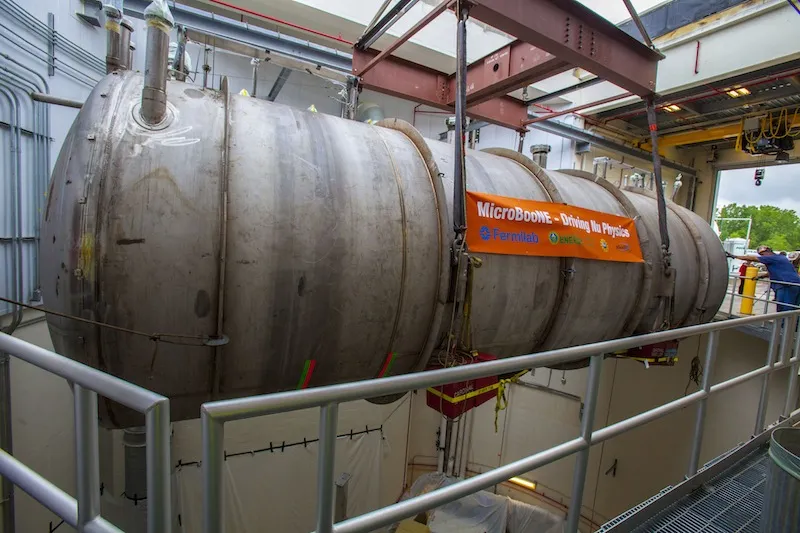
The MicroBooNE neutrino detector
The hunt for an elusive fourth type, or "flavor" of neutrino has come up empty, scrambling the efforts to explain weird behavior that keeps cropping up in particle physics experiments.
Neutrinos are tiny, ghostly particles that rarely interact with other types of matter. Scientists already know of three flavors of neutrinos that can oscillate between each other. But for decades, scientists thought there may be a fourth. Known as the sterile neutrino, this proposed fourth type of ghost particle would not interact with matter at all, except via gravity. If they existed, these shy particles could be used to explain elusive dark matter, which does not interact with light but exerts gravitational pull.
In the 1990s, scientists conducting experiments in the Liquid Scintillator Neutrino Detector at Los Alamos National Laboratory saw hints of a neutrino that didn't interact with matter.
Then in 2018, scientists with a neutrino experiment called MiniBooNE, run by Fermilab near Chicago, said they had also spotted signs of the sterile neutrino. If it exists, the sterile neutrino would upend the Standard Model, the overarching framework that explains the behavior of subatomic particles.
Now, two follow-up experiments have found no evidence for these misbehaving neutrinos. One experiment called MicroBooNE, also run by FermiLab, was much more sensitive than MinibooNE, so its null results, reported Dec. 3 in the journal Nature, are especially convincing. A second experiment, called the Karlsruhe Tritium Neutrino (KATRIN) experiment, also showed no sign of sterile neutrinos.
So does that mean the sterile neutrino theory is dead? Not absolutely, but the two experiments did rule out large swaths of the size ranges where sterile neutrinos could plausibly be found, and where they would explain past anomalies, like the MiniBooNE and Los Alamos findings, the New York Times reported.
Isolated in southern Africa

A mandible from the Matjes River 1 woman, who lived 7,900 years ago in southern Africa. Genetic analysis suggests people from her region were genetically isolated for nearly 100,000 years.
From a couple dozen ancient human genomes — including one that is over 10,000 years old — researchers have discovered that some members of our species, Homo sapiens, were geographically isolated in southern Africa for hundreds of thousands of years. It wasn't until about 1,400 years ago that this large group of people began regularly interacting with other African populations.
This ancient southern African population evolved different variants in genes that code for UV light protection and skin pigmentation — genes that have very low frequencies in other ancient and modern groups. The researchers suggested that this set of genes may have evolved as an adaptation to the region's arid grasslands, which offer limited protection from the sun.
To learn more about the history and evolution of humans in Africa, read our coverage of the published study.
Flight MH370 search resumes
The Malaysian government announced that a Texas-headquartered marine robotics company Ocean Infinity is resuming the search for the lost MH 370 plane, a Boeing 777 that vanished above the Indian Ocean more than 10 years ago, CBS is reporting.
The flight went offline on March 8, 2014, less than an hour into its flight from Kuala Lumpur to Beijing. There were no signs of weather problems, no distress signals, and no statements or demands from terrorist groups.
A 2018 investigation suggests the flight was deliberately taken off course, but experts say no firm conclusions can be drawn about when and why until the wreckage is found, according to the BBC.
Precious little of the plane has been found. In 2015, a flaperon from the flight washed ashore on Réunion island, and in 2016, fragments of debris were found on Africa's eastern coast.
If the new search did recover a black box, it would have had to survive for years in the corrosive saltwater. But if it is still operational, it could have recorded 1,000 pieces of information about the plane that would give clues to its demise.
Multiple searches for MH 370, involving dozens of countries across 46,000 square miles (119,000 square kilometers) have been initiated over the last 11 years. The most recent one was suspended earlier this year due to unfavorable conditions. It's been difficult to find the plane because the potential area it could have crashed is vast, weather conditions are frequently rough, and the ocean is very deep in many spots, according to CBS.
It's not clear whether there's new information guiding the latest search, but Ocean Infinity representatives said the company is using new technology and expertise to narrow the search radius, according to CBS.
Auroras are on the way!

The Northern Lights could reach Oregon, Iowa, and Pennsylvania tonight, NOAA says.
More than a dozen U.S. states may be able to spy the Northern Lights tonight, as a powerful stream of solar particles reaches our planet.
Today (Dec. 3) the National Oceanic and Atmospheric Administration (NOAA) issued an alert for a strong G3 geomagnetic storm — a disturbance in our planet’s magnetic field triggered by an onslaught of charged solar particles. The solar stream is coming from a coronal hole (a large, open region of magnetic fields on the sun from which solar wind escapes more easily) that’s aimed at Earth, and is seemingly unrelated to the mighty X-class solar flare that blasted off our star earlier this week.
G3 storm conditions were confirmed around 3:30 EST this afternoon, and could mean auroras visible as far south as Oregon, Iowa and Pennsylvania tonight, according to NOAA. The storm could also cause GPS issues and high-frequency radio disturbances, the agency added.
Mid-latitude auroras remain likely for the rest of the week as a large, menacing sunspot region rotates into Earth’s view. Stay tuned for further updates — and, if the Northern Lights stay too far north for you, enjoy this stunning time-lapse view of auroras captured from the International Space Station by NASA astronaut Jonny Kim.
Another time lapse of the solar particle event last month. I accidentally captured parts of the window frame but I think it adds to the ISS feel. Nikon Z9 | 14mm | Nov 12, 2025. pic.twitter.com/l4UwTxOhFCDecember 3, 2025
Heading out
It's time for the U.S. team to retire for the night, but check her for updates first thing U.K. time. We'll leave you with this joke, courtesy of my 11-year-old.
Why didn't the skeleton want to go to the party?
Because he had no body to go with.
Catch any auroras?

Good morning, science fans! Patrick here to lead you through another day of our science news blog coverage.
There was a space storm forecast last night. The NOAA issued a strong G3 geomagnetic storm warning in anticipation of solar activity causing a disturbance in Earth's magnetic field.
Yesterday, our space and physics editor Brandon flagged that the resulting storm had the potential to cause issues with GPS and high-frequency radios, but also produce auroras.
The skies have been cloudy here in the U.K., but the northern lights were potentially visible across more than a dozen U.S. states. I'll keep you posted on any developments, but the potential for mid-latitude auroras will remain likely for the rest of the week.
Comet 3I/ATLAS photobomb
Everyone's favourite interstellar object has photobombed a domestic comet observation in a new NASA telescope video.
NASA's PUNCH mission was tracking the long-tailed comet 2025 R2 (SWAN) in September when interstellar comet 3I/ATLAS whizzed across its path.
In the newly released video, comet SWAN can be seen passing between two flickering bright objects, which are Mars and the star Spica, before comet 3I/ATLAS makes a brief appearance.
Comet 3I/ATLAS is a rare visitor from outside of our solar system, so every new observation is a treat. The PUNCH mission explores how solar wind influences objects in our solar system, including planets and these comets.
"Watching the sun's effects from multiple vantage points — and with different types of instruments — is what gives us a complete picture of the space environment," Gina DiBraccio, the acting director of the Solar System Exploration Division at NASA's Goddard Space Flight Center, said in a statement.
"We use these same tools to track and analyze how space weather impacts our astronauts, our spacecraft, and our technology here on Earth."
Live Science news roundup
Here are some of the best Live Science stories from yesterday that we didn't cover on the blog:
Dinosaur highway discovered in Bolivia

Carreras Pampa in Bolivia is now one of the premier dinosaur track sites in the world.
Yesterday news broke of a fresh world record for paleontology: Scientists revealed the most extensive dinosaur tracksite known on Earth with a staggering 16,600 fossilized footprints.
These footprints run parallel to ripple marks that suggest this site was once a coastline. Researchers also found 1,378 swim tracks, which are straight or comma-shaped scratches left by a dinosaur's toes in the ground below the water.
The tracksite is located in Torotoro National Park in central Bolivia. It dates to the late Cretaceous period (145 million to 66 million years ago) and spans 80,570 square feet (7,485 square meters).
The discovery tops another Bolivian dinosaur track site, known as Cal Orck'o or the "Dinosaur Dancefloor," for the highest number of footprints ever found. Cal Orck'o is a nearly vertical wall in an active quarry that is covered in 5,000 dinosaur footprints. The wall was once a muddy lakeshore, but geological processes tilted it by 180 degrees to its current position.
Scientists say there are many more dinosaur footprints waiting to be discovered in Torotoro National Park and in Bolivia.
For more on the new record-breaking track site, read our coverage here.

Monkey escape update

A stock image of a rhesus macaque.
An escaped lab monkey that fled a Mississippi highway crash has found a new home, ABC News reports.
The rhesus macaque, named Forrest, was one of several monkeys that broke loose in October after the truck carrying them from Tulane University overturned in Jasper County.
Law enforcement officers killed five of the monkeys, which were initially thought to be aggressive and carrying herpes, COVID-19 and hepatitis C. Tulane University subsequently clarified that the monkeys weren't infectious.
Forrest was one of three monkeys that escaped the crash site. Civilians killed the other two monkeys — there was a lot of fear and panic surrounding the escape — while officials said that workers from the companies transporting the monkeys captured Forrest, according to ABC News.
Forrest now has a permanent home at the nonprofit Popcorn Park Animal Refuge in New Jersey.
'Cold Supermoon' tonight!

The moon rising above the Sarikamis district of Kars in Turkey earlier today.
A reminder that the "Cold Supermoon" rises tonight.
December's full moon, known as the "Cold Moon," will be the second largest and last of this year's supermoons — and full moons.
You may have seen that the moon appeared bright and full last night. The same will be true on Friday. However, the moon officially reaches peak fullness at 6:14 p.m. EST this evening.
You can read all about tonight's full moon and how best to view it here.
Indonesia's deadly floods

Flood damage in Kuala Simpang village, North Sumatra, on Tuesday.
Deforestation may have "turbocharged" deadly flooding in Indonesia, AFP reports via France 24.
A rare tropical storm brought devastating rains to Sumatra and other regions last week. Now, experts say that deforestation made impacted areas more vulnerable to the flash flooding and landslides that ensued.
Reuters has reported that the Indonesian authorities are investigating companies that are suspected of clearing forests around the areas hit by flooding.
The flooding and landslides have resulted in the deaths of 836 people at the time of writing, but hundreds more are still missing.
Brits signing off
That's all from the U.K. side, but there's more science news to come from our U.S. colleagues.
The chaos of a medieval volcano

A plaque in England commemorates the arrival of the Black Death in 1349.
Was a volcanic eruption the prime mover in the deadliest pandemic in Europe's history? That's what a team of researchers is arguing in a new study published today.
The theory goes: sulfate aerosols ejected from a previously unknown volcano in 1345 led to climate change — extremely wet springs and extremely cool summers — that caused Italian crops to fail and grain prices to soar.
In 1347, to avert a famine, Italian merchants imported grain from the Golden Horde around the Black Sea … and imported plague-carrying fleas with it, causing the Black Death. Oops.
To learn how ice core data from Antarctica and tree-ring analysis from Europe support the new theory, check out our coverage here.
FDA lowering trial requirements for drug approvals

The FDA is announcing a policy change regarding drug safety and efficacy trials.
The U.S. Food and Drug Administration (FDA) has historically required drug developers to conduct two clinical studies of new medical products prior to their approval. But that is changing, STAT recently reported.
FDA Commissioner Marty Makary told STAT that the agency will require only one clinical study of a new drug's safety and efficacy prior to considering it for approval. In recent years, the requirement for two trials has become more flexible — increasingly, developers have been allowed to submit data from just one trial, provided it was deemed "sufficient," and the FDA could ask for additional supporting evidence, such as that gathered in drug-mechanism or animal studies. But even though it's become more commonplace, this one-trial practice has not been the default. The new FDA policy will make it so.
A press release about the change is forthcoming, and in the coming months, the FDA will update its related policies. Appointees of the Trump administration have said they want to speed the drug approval process, and this change appears to align with that stance. However, expert sources both within and outside the FDA told STAT that this move is confusing.
While in theory it's possible to get the same evidence of effectiveness in one study as you get in two, the change is being read by many as a move away from the rigorous data collection and high-quality trial design that was once standard. Anonymous sources familiar with the matter also told STAT that the change was one factor that prompted Richard Pazdur, former director of the FDA's Center for Drug Evaluation and Research, to suddenly step down.
Even as the FDA seems to be streamlining the drug approval process in some ways, in the world of vaccines, the agency intends to raise the regulatory bar to seemingly insurmountable heights, making the approval of new vaccines very challenging. You can read more about this hodge-podge of policy making at STAT.
Male dolphins with best buds age slower biologically

Male dolphins that are more socially connected aged more slowly than more isolated individuals, a new study finds.
Having strong friendships enriches our lives, but did you know they may also help us live longer? A growing body of evidence is finding that meeting up with friends more frequently and feeling socially supported slows our "epigenetic clocks" — a measure of biological aging.
Now, new research, published Nov. 29 in the journal Communications Biology, has revealed a similar pattern in another highly social mammal: dolphins.
Researchers observed the social interactions of 38 male Indo-Pacific bottlenose dolphins in Shark Bay, Australia. The team knew the individuals' chronological age and took skin samples to assess their epigenetic ages.
The results revealed a correlation: more socially connected individuals aged more slowly than more isolated individuals. "Among individuals of the same chronological age, those with stronger social bonds tend to have a lower epigenetic age," the researchers wrote.
The team speculated that social bonds could cause slower biological aging by reducing stress, thereby decreasing inflammation and oxidative stress.
Further work to determine the mechanisms underlying this association would shed light on the evolutionary relationship between social bonds and aging, the authors wrote in the study.

Found in space: 'Probably the largest spinning object' ever seen

Nothing in space sits still for long. Earth spins as it orbits the sun. The sun spins as it orbits the center of the galaxy. And the galaxy itself? You can see where this is going.
But what’s the largest, cohesive spinning structure in the universe? Scientists think they’ve found it. Located 140 million light-years away, far beyond the bounds of the Milky Way, an enormous tornado of gas is spinning through space, along with the 14 individual galaxies trapped inside it.
What exactly is this giant structure, and why were researchers so surprised to find it? Read Live Science contributor Joanna Thompson’s latest story to find out.
Huge skull pit found in China

A rock carving found outside the city walls of Shimao. A huge pit full of skulls was unearthed at the site.
Archaeologists working in China have unearthed a 4,000-year-old pit filled with human skulls. The ancient pit was dug just outside the stone walls of Shimao, a city that flourished for around 500 years in what is now Shaanxi province.
The skulls likely came from human sacrifices. The researchers analyzed the DNA in around 80 individuals and found a definite sex-skew in who was sacrificed in the skull pits. Live Science staff writer Kristina Killgrove has the story on who was sacrificed, and why it surprised archaeologists so much.
NASA reveals new Hubble image of comet 3I/ATLAS

Hubble's second view of 3I/ATLAS is significantly clearer than the first
NASA's Hubble Space Telescope has taken a new look at interstellar comet 3I/ATLAS as the mysterious object zooms toward its closest encounter with Earth.
Hubble was one of the first telescopes to observe 3I/ATLAS shortly after it was discovered in July. At the time, the interstellar comet was traveling far beyond the orbit of Mars, but the fuzzy blue blur in Hubble's first image allowed astronomers to constrain its size to somewhere between 1,400 feet (440 meters) and 3.5 miles (5.6 kilometers) wide — likely the largest interstellar object seen to date.

Hubble's first view of 3I/ATLAS, taken shortly after its initial discovery
The new Hubble image — taken on Nov. 30 — shows the comet much closer, at about 178 million miles (286 million km) from Earth, according to NASA. It's a significantly clearer view, though NASA has yet to release any revelations from the new observation. (The long streaks in the background are stars.)
3I/ATLAS will reach its closest point to Earth on Dec. 19, when it will be roughly 170 million miles (270 million km) away. In other words, Hubble's latest view is one of the best we will ever get of the infamous interstellar interloper.
Stay tuned for more 3I/ATLAS updates. -Brandon
Unanticipated effects of China's 'regreening' efforts

An aerial view of China's Kubuqi Desert, where a large-scale tree planting effort to slow desertification.
Live Science staff writer Sascha Pare has a fascinating story about how government-led environmental initiatives can have unintended consequences.
Decades ago, the Chinese government decided to stop erosion and climate change by planting trees. The biggest of these efforts, known as the Great Green Wall, was started in 1978 to stop desertification from spreading across the country. It worked: In 1949 forests covered just 10% of the country, while today a quarter of the country's land mass is forested.
But the massive ecological remodeling process had huge — and troubling — impacts on the country's groundwater distribution.
Read more to learn about how the regreening efforts changed China's water availability, and what it suggests about future efforts to engineer ecosystems.
Heading out
The U.S. is heading out, but the Brits will be back online tomorrow with all the latest news.
In the meantime, we'll leave you with this joke, from the website of the math game Prodigy:
Which king loved fractions?
Henry the 1/8
The moon was bright

The San Gabriel Mountains and Los Angeles were a perfect backdrop to last night's supermoon.
Good morning, science fans! Patrick here to kick off another day of our science news blog coverage.
Did you see it? Did you see the "Cold Supermoon"? It was bright, right? I thought it looked bright. Last night's full moon was the second largest and last of the 2025 supermoons (and full moons).
The moon officially reached peak fullness at 6:14 p.m. EST on Thursday, but don't worry if you missed it. The moon will also appear bright and (ever so slightly less) full again tonight, just as it did on Wednesday.
Live Science news roundup
Here are some of the best Live Science stories from yesterday that we didn't cover on the blog:
- Geminids 2025: The year's best meteor shower is coming, with a second shower hot on its tail
- Injecting anesthetic into a 'lazy eye' may correct it, early study suggests
- Collapse of key Atlantic current could bring extreme drought to Europe for hundreds of years, study finds
- MIT invention uses ultrasound to shake drinking water out of the air, even in dry regions
'Cold Supermoon' pictures
Feast your eyes on these pretty snaps of last night's supermoon.

The final supermoon of the year rises over vineyards near Wellsona, California.

The "Cold Supermoon" rises over National Route 33 in Firmat, Argentina.

Here, the full moon is rising over the Angel of Independence monument in Mexico City, Mexico.

A full moon rising over the Empire State Building in New York City is a classic shot for photographers, and this one is no different.
A man posing with a wheelbarrow as if he's carrying the "Cold Supermoon" in the Sarikamis district of Kars, Turkey.
Comet 3I/ATLAS gets the Juice

This new image is just a sneak peek at what the ESA's Jupiter Icy Moons Explorer has gathered on comet 3I/ATLAS.
The interstellar comet 3I/ATLAS has "surprised" scientists with signs of activity in a new, limited European Space Agency (ESA) observation.
The ESA's Jupiter Icy Moons Explorer (Juice) snapped an image of the comet on Nov. 2, while collecting data on its behavior and makeup.
The Juice team won't receive all of the data until February 2026. However, they did manage to download a quarter of a single NavCam image early, just because they couldn't wait — scientists are very excited about this interstellar visitor!
Despite only downloading a small amount of data, comet 3I/ATLAS was still clearly visible in the image and surrounded by signs of activity, which was a surprise, according to the ESA.
"Not only do we clearly see the glowing halo of gas surrounding the comet known as its coma, we also see a hint of two tails," an ESA spokesperson wrote in a statement. "The comet's 'plasma tail' — made up of electrically charged gas, stretches out towards the top of the frame. We may also be able to see a fainter 'dust tail' — made up of tiny solid particles — stretching to the lower left of the frame."
It will be exciting to see what the Juice team learns when they have all of the comet data in February, but unfortunately, the long wait is necessary.
"Juice is currently using its main high-gain antenna as a heat shield to protect it from the sun, leaving its smaller medium-gain antenna to send data back to Earth at a much lower rate," the spokesperson wrote.
Hubble's new look at comet 3I/ATLAS
Hubble's second look at comet 3I/ATLAS will likely be among the best we ever get.
The ESA's new image of comet 3I/ATLAS arrives hot on the heels of another observation. Yesterday, Brandon brought you news that NASA's Hubble Space Telescope had gotten a fresh look at the comet on Nov. 30.
Hubble's latest observation resulted in this stunning snap of the comet zooming through our solar system around 178 million miles (286 million kilometers) from Earth.
This is Hubble's second observation of comet 3I/ATLAS. The space telescope initially locked onto the comet in July, just after it was first discovered.
Hubble first imaged comet 3I/ATLAS on July 21.
Hubble's first attempt to image the comet wasn't bad, but it was pretty blurry. The comet was about 100 million miles (160,000,000 km) further away from Earth when the first photo was taken.
Comet 3I/ATLAS is now almost as close as it will ever be to Earth. The comet will make its closest approach on Dec. 19, when it will be roughly 170 million miles (270 million km) away.
Olo amigo!

Earlier this year, researchers hijacked the human eye to get it to see a new color, dubbed "olo."
Around this time of the year Google drops its much anticipated (at least by oddballs like me) Year in Search. As ever it was largely filled with dubious fashion choices, catchy K-pop bops and various generations doing weird things. However, one trend that did catch our eye — quite literally — was the brand new color dubbed "olo," which our health editor Nicoletta reported on earlier in the year.
In April the internet went wild for this mysterious new shade of "blue-green of unprecedented saturation," despite no-one but a select few study participants actually being able to see it. In the study, researchers were attempting to activate individual cells in the eye that were sensitive to shades of green using a technique they called "Oz" (you know, because of the wizard), but they quickly realised they could use this technique to study vision at a new level of precision. They were then able to use Oz to crank up the response from the green-receptive cells and dial back the responses of other cells.
So what does olo look like? According to the researchers, the best way to think of it is to imagine the light from a green laser pointer and then turn up the saturation — but I guess we'll just have to take their word for it.
You can read the full story here.

Green helium?

The company Pulsar Helium has conducted a number of surveys for carbon-free helium in East Greenland (shown here), and the results are positive so far, they say.
A combination of geologic "ingredients" in Earth's crust could provide the "carbon-free" helium source that humanity is craving, staff writer Sascha Pare reports in the latest Science Spotlight feature.
Scientists use helium as an essential cooling component in nuclear reactors, rockets and medical equipment such as MRI machines. The problem is that helium is scarce, demand is high, and traditional methods of extracting it carry a huge carbon footprint.
In her new feature, Sascha explores a potential new source of helium that is described as "carbon-free," which could revolutionize helium production.
The Science Spotlight series is where our reporters delve deeper into emerging science. These articles are member exclusives, which means that you need to create a free account on our website to access them (if you haven't done so already).
You can read Sascha's full story here. Non-members will also find details on how to sign up there.
This week in AI

A lot has been happening in the world of AI.
It's been a busy week in the AI world. I'm Keumars, our technology editor, and I've jumped on to walk you through this week's biggest AI stories.
After "AI bubble" fears receded (for now), it's been business as usual with Google launching its newest gold standard-setting Gemini model and its specialized tensor processing unit (TPU) chip, followed by Amazon's own frontier models.
But these are just the latest releases in what threatens to become a glorified horse race. It's worth remembering, amid the speculative noise around benchmark scores and stock performance, that AI is having a material and often worrying impact in the real world and how we communicate.
For example, a new study shows that people are more likely to "exploit" a female-labeled AI agent than any other gender. Further afield, an alarming report in Rolling Stone (published last week) highlighted that towns intertwined with data centers have been linked with a higher incidence rate of debilitating rare cancers.
Similarly, Elon Musk's xAI computing facility, Colossus, has been blamed for worsening air pollution in Memphis — a concern that has rumbled throughout the year and resurfaced this week after a report in The Times.
Incidentally, Musk's Grok chatbot has been on top form this week — showcasing some of the very worst aspects of this emerging technology. If reportedly revealing the addresses and personal details of normal people (known as doxxing) wasn't enough, the model has also been incredibly antisemitic (again), according to Futurism.
While AI is improving incrementally as each month passes, this mostly comes in the form of abstract percentages on leaderboards that matter to very few. True "progress" will be measured by the impact it has on most people and their everyday lives, now and in the future — and it's presently failing that test spectacularly.

Joshua trees on fire

Joshua trees in Joshua Tree National Park.
A wildfire burned hundreds of iconic Joshua trees during the government shutdown, the Los Angeles Times reports.
The fire broke out at California's Joshua Tree National Park last month after a park visitor reportedly lit their toilet paper on fire.
Joshua trees are twisted and spiky and look like they've come out of a Dr. Seuss book. Firefighters quickly put out the fire, but not before it had scorched many trees across 72 acres (29 hectares).
These friendly-looking trees have survived for around 2.5 million years in the inhospitable Mojave Desert. But they could go extinct by 2070 unless we take action against climate change, a 2019 study found
Signing off across the pond
I'm signing off as the U.K. team closes up shop for the week. There's more science news to come from my U.S. colleagues, so keep checking back.
I'll leave you with this short joke that entomologist Amoret Whitaker told The Guardian in 2013.
A blowfly goes into a bar and asks: "Is that stool taken?"
Have a great weekend!
CDC panel votes against universal hep B vaccination for newborns

Vice chair Dr. Robert Malone shown on a screen during the ACIP meeting, which voted against recommending universal newborn hepatitis B vaccination.
In a chaotic multi-day meeting, the Advisory Committee on Immunization Practices (ACIP), which steers the vaccine policy for the Centers for Disease Control and Prevention (CDC), voted to end recommendations for universal hepatitis B vaccination for newborns. Instead, the new recommendations suggest that babies of mothers who test negative for hep B should get the vaccine at 2 months.
The new vote comes after Health and Human Services Secretary Robert F. Kennedy Jr.'s ousted several longstanding ACIP members and replaced many of them with anti-vaccination skeptics, some of whom have no medical credentials.
"This has a great potential to cause harm, and I simply hope that the committee will accept its responsibility when this harm is caused," Dr. Robert Hibbeln, one of the members of ACIP who voted against the new recommendations, said at the meeting.
The problem is, the "risk stratified" approach to hep B vaccination doesn't work. Prior to the rollout of the universal vaccination recommendations 30 years ago, there were persistently high levels of hep B in children, Angela K. Ulrich, co-author of a new review of 400 studies on the impact of the universal vaccination policy, told Center for Infectious Disease Research and Policy (CIDRAP). Only 18% of mothers get tested for hepatitis B during pregnancy, and only 35% of those who test positive get the recommended follow-up care, she noted.
The universal vaccination recommendation has been one of public health's biggest success stories. Since that recommendation was rolled out three decades ago, prevalence of acute hep B infections fell from 3 per 100,000 people ages 19 to 0 per 100,000 in 2023.
In areas of high prevalence, hepatitis B is typically transmitted from mother to baby at birth and can lead to chronic infections. Young kids can also get the virus from bites at preschool, or from infected wounds. Up to 1 in 4 people who are infected at birth will die prematurely of liver disease.
You can read all about the rollback of universal hep b vaccination recommendations here.
A sunspot for the ages?

A new sunspot region (bottom) covers about 90% of the area of the infamous Carrington Event sunspot (top)
Senior staff writer Harry Baker here to tell you about a massive new sunspot that recently appeared on the sun — and which is currently pointing right at Earth.
The dark patch, dubbed AR 4294-4296, is on par with the infamous sunspot that birthed the disastrous Carrington Event of 1859. If a similar solar storm hit Earth today, it could wipe out all our satellites and damage the electrical grid, causing trillions of dollars worth of damage.
Scientists are optimistic, for now, that the new sunspot region won't cause a Carrington-level storm. But we may have to reassess the situation again in a few weeks. Read my latest article to find out why.

Blood glucose monitors tied to 7 deaths, FDA warns

Some Freestyle Libre 3 and Libre 3 Plus sensors may give artificially low blood sugar readings, and should be replaced, the FDA is warning.
The Food and Drug Administration (FDA) is warning that some blood glucose monitors may give falsely low blood sugar readings, and have been linked to seven deaths and 700 injuries worldwide, the Associated Press is reporting.
The monitors affected are subcutaneous glucose monitors, meaning they sit under the skin and infer blood sugar levels by measuring sugar levels in the interstitial tissue, which sits below the skin.
Over long periods, consistently low readings can lead people to underdose insulin or eat too many carbohydrates to treat lows. This can raise blood sugar levels dangerously high and can trigger the body to produce acidic compounds called ketones, eventually causing a fatal complication called diabetic ketoacidosis.
The faulty FreeStyle Libre 3 and FreeStyle Libre 3 Plus sensors, made by Abbott, are all from the same production line, and about half of them have either been used already or are expired, according to the FDA. Users can check whether their unused sensors are affected by entering their serial numbers at FreestyleCheck.com.
Live from the Global Space Awards

Live Science senior staff writer Harry Baker at the Global Space Awards
Harry Baker here, blogging live from the red carpet of the inaugural Global Space Awards at London's Natural History Museum!
The new awards, hosted by physicist Brian Greene, celebrate all the work being done by individuals and companies inspiring the next wave of innovations in the space sector.
The finalists, spanning eight categories, were announced last month — in low Earth orbit. Other notable guests include ESA astronaut Tim Peake and British science communicator Dr. Maggie Aderin-Peacock. The family of the late James Lovell will also be in attendance to celebrate the life of the Apollo 13 astronaut.
The winners will be announced this evening.
Huge helium reservoirs, just waiting to be discovered
New discoveries of "carbon-free" helium reservoirs could transform the industry.
Helium is rare on Earth, and made only very slowly inside Earth's crust. And historically, helium was only found at very low concentrations alongside natural gas — making extracting the element costly and the helium industry a big source of carbon emissions.
But recent discoveries of massive, highly concentrated "carbon-free" helium reservoirs are changing our understanding of how these caches can form — and giving geologists hope that there may be many monster accumulations of the noble gas just waiting to be discovered.
Live Science staff writer Sascha Pare investigates where to look for these bonanza reservoirs, which could revolutionize the helium industry, in her Science Spotlight piece here.
Have a good weekend!
The Live Science U.S. crew is heading out for the weekend, but we'll be back online next Monday with all the latest news.
We'll leave you with this chemistry joke, courtesy of University of Illinois Chicago researcher Nancy Freitag:
What did the thermometer say to the graduated cylinder?
"You may have graduated, but I have more degrees."