













Climate change is literally altering the shape of our planet
The melting of the poles is increasingly shifting Earth's shape at a faster rate, with the planet becoming more and more round.

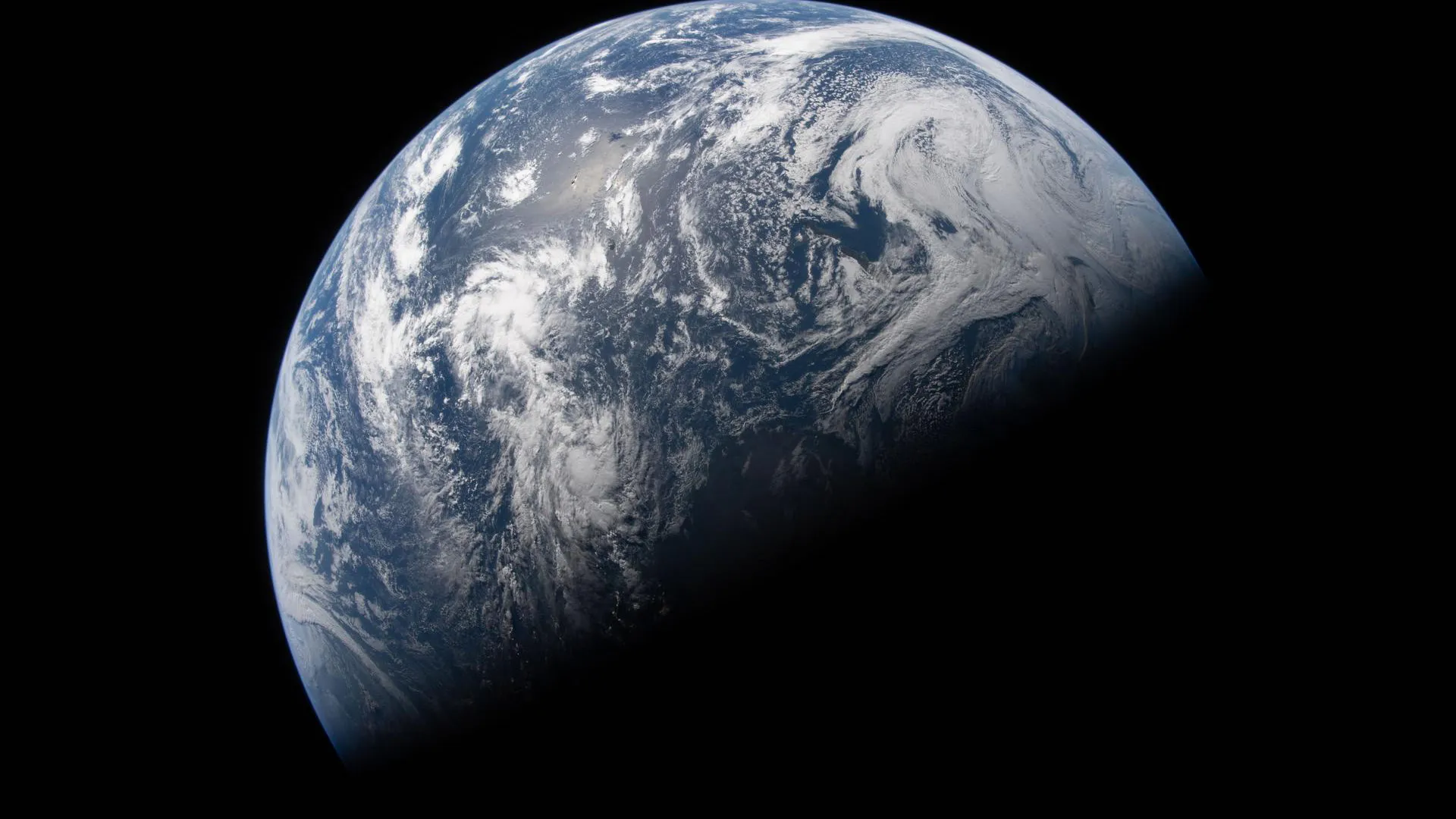
Climate change is making Earth progressively rounder, new research finds.
The findings are a signal of human-caused climate change, however, and tracking the shape of the Earth can help reveal just how much impact people are having on its ice caps.
Our planet is not a perfect sphere. Because of its rotation, it is a bit flatter at the poles and bulges in the middle. But the new study reveals that Earth is getting rounder at an accelerated rate, largely due to shifts caused by the melting polar ice caps.
This finding applies only to the solid parts of the planet; the ocean continues to bulge outward at the equator.
The study, published Sept. 9 in the journal JGR Solid Earth, used direct measurements from the global navigation satellite system (GNSS) to track the planet's shape-shifting over time. This system provides direct measurements, but there are limits in how it can be used. For example, there are few GNSS stations near the North and South poles and few in remote oceans because they must be deployed on buoys.
Christoforos Kotsakis, a professor of geodesy at the Aristotle University of Thessaloniki in Greece, developed a new method for analyzing GNSS data to better capture the changes in the planet's surface. He found that the poles are rising and the equator's bulge has been shrinking, each by about 0.04 inch (1 millimeter) per year between 2011 to 2015. That's a small number, considering Earth's diameter at the equator is about 7,926 miles (12,756 kilometers). But that change is bigger than between 1997-2000, when Earth was becoming about 0.02 inch (0.5 mm) rounder per year. This means Earth's shape is rounding at 0.016 inch (0.4 mm) more per year with each decade that passes.
Related stories
The shift is being driven by polar ice melt, which takes pressure off the Earth's crust and allows it to rise slowly, similar to how rising bread dough springs back after you press a finger into it, Kotsakis reported. Meanwhile, increased mass toward the equator puts pressure on the crust there, reducing its bulge. However, there's a catch: When considering the solid Earth and the ocean together, the planet is getting flatter by about 0.03 inches (0.8 mm) a year because the ocean is getting bulgier at the equator as water shifts away from the poles. This 'water weight' overwhelms the rounding happening in the rock below.
Get the world’s most fascinating discoveries delivered straight to your inbox.
These shifts are also slowing Earth's rotation, other research has shown.
Researchers also track Earth's changing shape using measurements of its gravity field, which varies depending on the mass of particular regions. GNSS changes and gravity field measurements don't match up perfectly, Kotsakis found, which indicates that the planet's shape and gravity field aren't in perfect lockstep. However, the two methods can be used together to track the major effects of climate change, especially the melting of Greenland and Antarctica and the varying movements of ocean water.
Kotsakis, C. (2026b). Mapping Global GNSS vertical velocities to solid Earth figure change. Journal of Geophysical Research Solid Earth, 131(9). https://doi.org/10.1029/2026jb034224

Stephanie Pappas is a contributing writer for Live Science, covering topics ranging from geoscience to archaeology to the human brain and behavior. She was previously a senior writer for Live Science but is now a freelancer based in Denver, Colorado, and regularly contributes to Scientific American and The Monitor, the monthly magazine of the American Psychological Association. Stephanie received a bachelor's degree in psychology from the University of South Carolina and a graduate certificate in science communication from the University of California, Santa Cruz.
You must confirm your public display name before commenting
Please logout and then login again, you will then be prompted to enter your display name.