


-
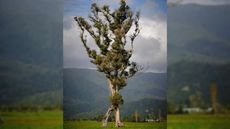 100-foot 'walking tree' in New Zealand looks like an Ent from Lord of the Rings — and is the lone survivor of a lost forest
An unusual northern rātā tree that looks like it is striding across an empty field has been crowned New Zealand's Tree of the Year. The giant plant, which looks strikingly similar to an Ent from "The Lord of the Rings," is centuries old.
plants -
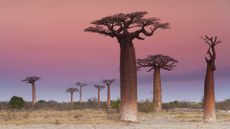 Bizarre evolutionary roots of Africa's iconic upside-down baobab trees revealed
The baobab tree evolved on the island of Madagascar before eventually spreading to Africa and Australia, new research suggests.
plants -
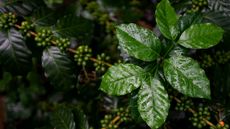 2 plants randomly mated up to 1 million years ago to give rise to one of the world's most popular drinks
Arabica coffee plant appears to have evolved between 600,000 and 1 million years ago after two other coffee species crossbred in the forests of what is now Ethiopia.
plants -
 Are kale, broccoli and Brussels sprouts really all the same plant?
Have you ever heard of the plant Brassica oleracea?
plants -
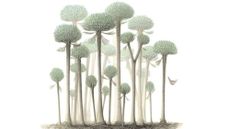 390 million-year-old fossilized forest is the oldest ever discovered
Researchers have discovered a fossil forest with small, palm-like trees and arthropod tracks dating back to the Middle Devonian.
plants -
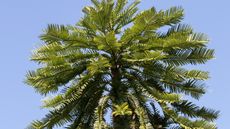 'Living fossil' tree frozen in time for 66 million years being planted in secret locations
Wollemi pines — thought to have gone extinct 2 million years ago — were rediscovered in 1994. Scientists are now hoping to reintroduce the species in the wild in a conservation effort that could take centuries.
plants -
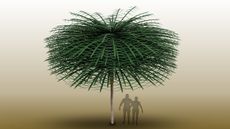 'We were gobsmacked': 350 million-year-old tree fossils are unlike any scientists have ever seen
Rare tree fossils preserved with their leaves have an architecture unlike any plant known today and represent the earliest evidence of smaller trees growing beneath the forest canopy.
plants -
 Fossils locked away for 1.75 billion years hold clues about key moment in Earth's history
Fossils from Australia provide the first direct evidence that photosynthesis was happening at least 1.75 billion years ago.
plants -
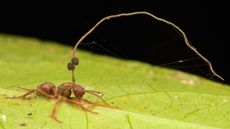 'Few insect orders have been spared': Why death by parasite keeps life in the forest thriving
"The fungus swiftly colonizes and liquefies the caterpillar's delicate innards via powerful enzymes that pervade the creature's entire body cavity, effectively consuming the caterpillar from the inside out."
plants


