















Famous supernova that lit up skies in 1181 is now full of mysterious knots — Space photo of the week
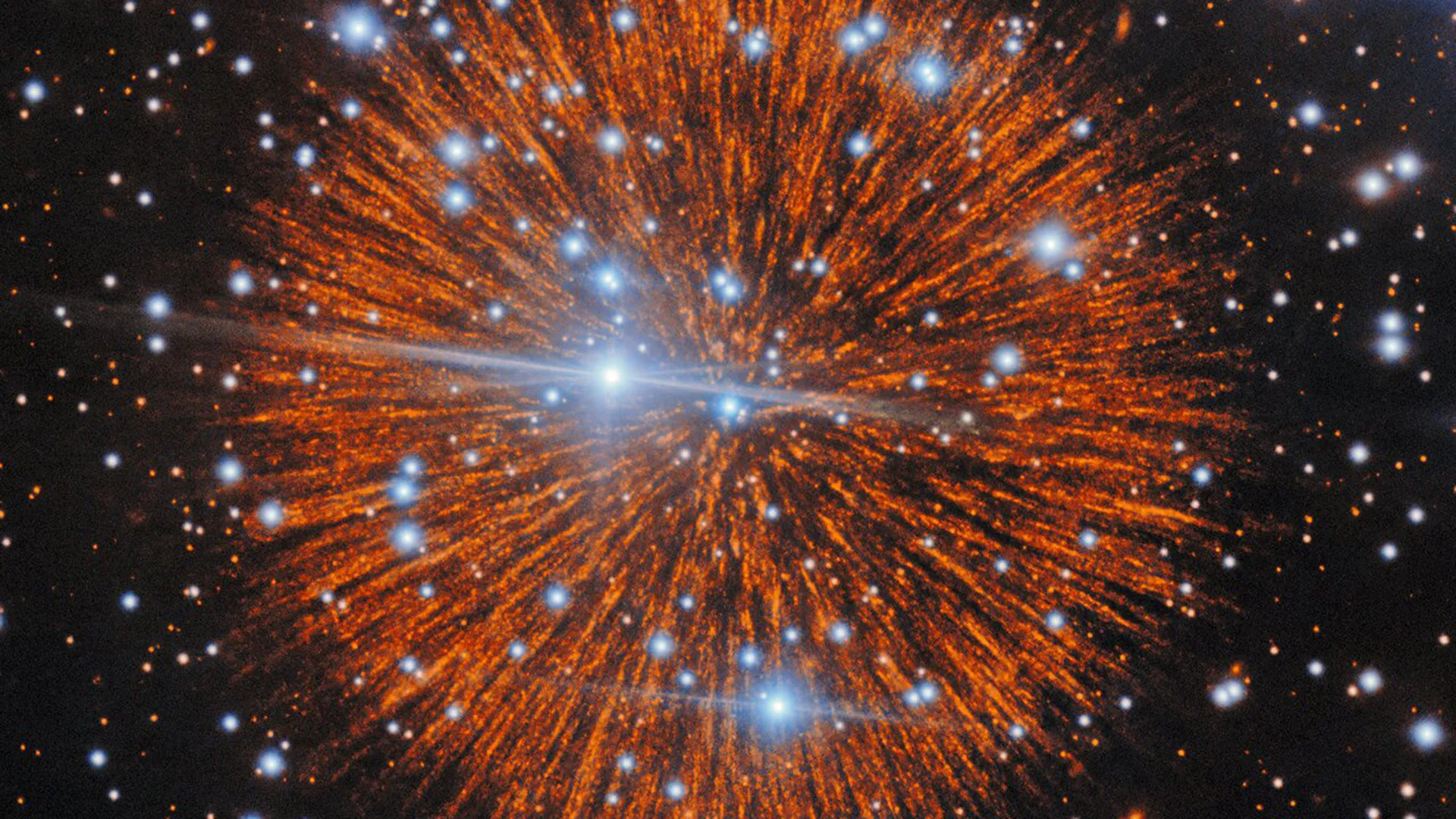
Pa 30, linked to a supernova seen in 1181, reveals chains of tiny gas knots in a new image from the Gemini North telescope in Hawaii.

Quick facts
What it is: Pa 30, a supernova remnant
Where it is: 7,500 light-years away, in the constellation Cassiopeia
When it was shared: Oct. 6, 2026
A mysterious "guest star" recorded by medieval astronomers nearly 850 years ago has revealed new secrets after scientists obtained the clearest images yet of its explosive aftermath.
New observations of Pa 30, thought to be the leftovers of a historic supernova called SN 1181, show that its spectacular firework-like filaments are not smooth streams of material. Instead, they consist of chains of tiny gas knots.
SN 1181 is so called because astronomers in China and Japan recorded its brief appearance in the year 1181, when they saw it as a naked-eye object in the constellation Cassiopeia. Eight surviving texts date its appearance to between Aug. 4 and 6 of that year. The mysterious object remained visible for 185 days.
"It's rare to get this level of detail on a supernova we can date to a specific week in history," Timothy Cunningham, an assistant professor of astronomy and astrophysics at the University of Warwick who led an international team of researchers to study the object, said in a statement.
SN 1181 is one of only five supernovas in the Milky Way galaxy known to have been witnessed from Earth before the invention of the telescope. (Those optical instruments first appeared in the Netherlands in 1608.) Now, advanced ground-based telescopes can produce wonderfully detailed images of those historic remnants. This latest image is from the Gemini North telescope on Mauna Kea in Hawaii and reveals about 10 times more filamentary structures in Pa 30 than have been seen before. This extraordinary detail gives astronomers fresh clues about the unusual explosion and the environment surrounding the star.
"These images give us the clearest picture yet of Pa 30's structure, and it's not what we expected," said Cunningham, whose team published their findings in The Astrophysical Journal. "The filaments are made of chains of tiny knots rather than smooth streaks, providing new constraints on the nature of the space around the star before it exploded and the physical processes that have shaped the expanding ejecta."
The knot-like structures may have resulted from variations in temperature or density in material surrounding the star as debris from the explosion expanded.
Get the world’s most fascinating discoveries delivered straight to your inbox.
Related stories
- A star 20 times the size of the sun died in a supernova — and telescopes around the world joined forces to watch it
- Scientists mapped the shape of a supernova for the first time ever – and it's not what we expected: Space photo of the week
- Scientists find evidence of 'supernova graveyard' at the bottom of the sea — and possibly on the surface of the moon
Pa 30 contains another unusual feature: a surviving star that sits almost exactly at the center of the remnant. That's highly unusual, because a supernova explosion typically sends stars away from their original positions. It suggests that the original explosion was highly symmetrical, the researchers said.
Furthermore, Pa 30 is thought to be a Type Iax supernova. Unlike standard Type Ia supernovas, which destroy their stars, a Type Iax event is a lower-energy, incomplete explosion of a white dwarf star that can leave behind a remnant known as a "zombie star." It's the only Type Iax supernova ever found.

Jamie Carter is a Cardiff, U.K.-based freelance science journalist and a regular contributor to Live Science. He is the author of A Stargazing Program For Beginners and co-author of The Eclipse Effect, and leads international stargazing and eclipse-chasing tours. His work appears regularly in Space.com, Forbes, New Scientist, BBC Sky at Night, Sky & Telescope, and other major science and astronomy publications. He is also the editor of WhenIsTheNextEclipse.com.
You must confirm your public display name before commenting
Please logout and then login again, you will then be prompted to enter your display name.