
-
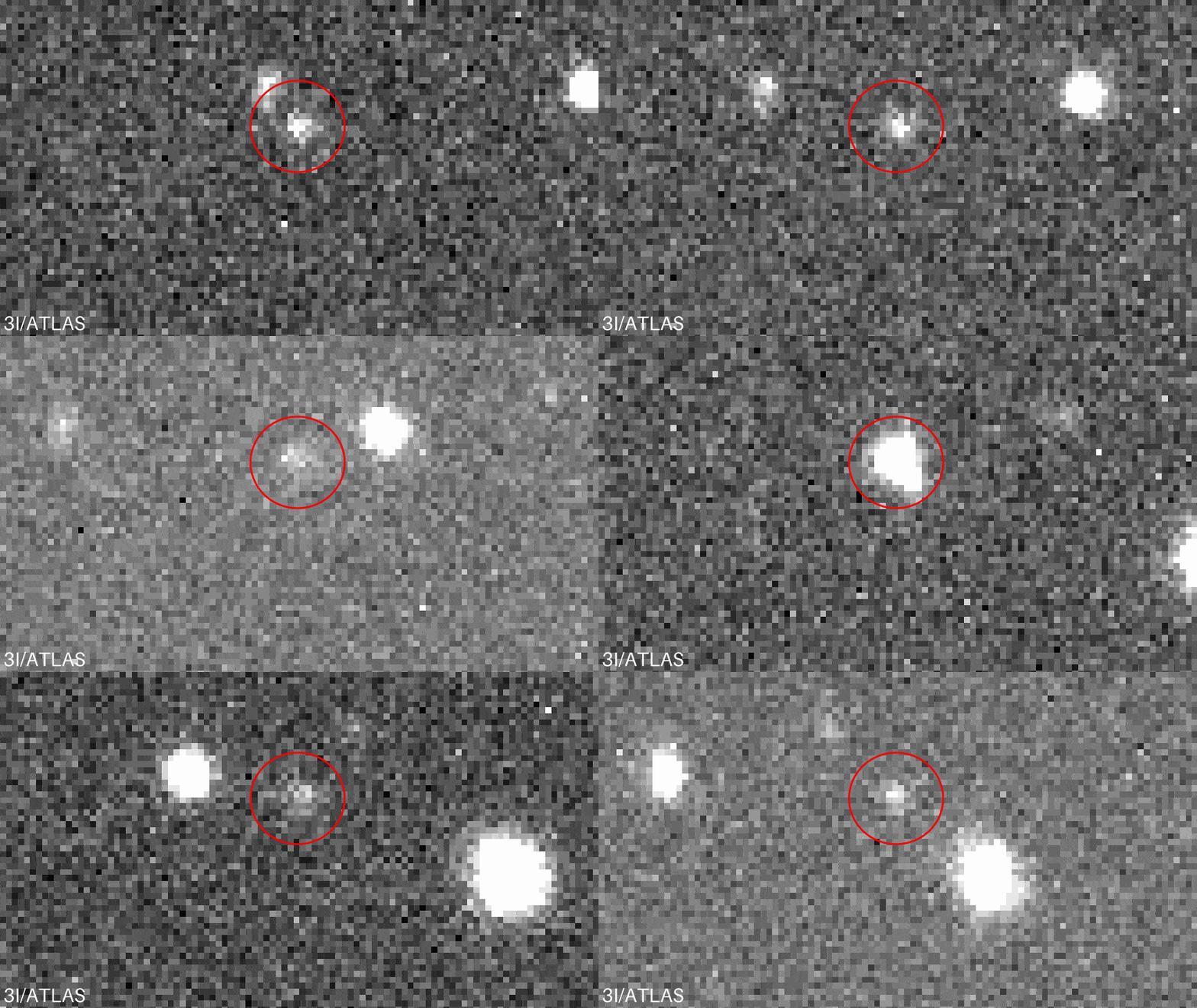 Astronomers are racing to study our solar system's newest 'interstellar visitor.' Here's why.
Astronomers have been given the rare opportunity to study an extrasolar object after the recent discovery of the interstellar comet 3I/ATLAS. Experts tell Live Science how they are planning to observe the cosmic visitor.
comets -
 Whooo's there? James Webb telescope spots rare 'Cosmic Owl'
Located billions of light-years away, the "Cosmic Owl" is a pair of colliding ring galaxies spotted by the JWST. It's also an "exceptional natural laboratory" for studying how galaxies evolve.
astronomy -
 James Webb telescope reveals dizzying galaxies in the Bullet Cluster: Space photo of the week
This unprecedented view of the Bullet Cluster provided by the James Webb Space Telescope and the Chandra X-ray Observatory reveals how the dark matter is distributed.
astronomy -
 James Webb telescope discovers tentacled 'jellyfish' galaxy swimming through deep space
A possible new "jellyfish" galaxy discovered by the James Webb Space Telescope could deepen our understanding of galaxy evolution and star formation.
2 Commentsastronomy -
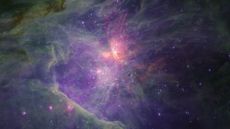 Mysterious 'rogue' objects discovered by James Webb telescope may not actually exist, new simulations hint
A new study lends support to the notion that JuMBOs (Jupiter-mass binary objects) discovered by the James Webb Space Telescope in 2023 may be fiction rather than fact.
astronomy -
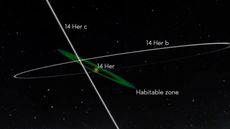 JWST spies frigid alien world on bizarre orbit: 'One of the coldest, oldest and faintest planets that we've imaged to date'
The James Webb Space Telescope has notched another milestone, capturing a direct image of one of the coldest and oldest known exoplanets.
-
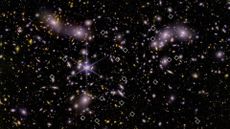 James Webb telescope spots tiny galaxies that may have transformed the universe
The James Webb Space Telescope has revealed dozens of tiny, distant galaxies piercing the fog of the cosmic dark age in the first billion years after the Big Bang.
astronomy -
 James Webb telescope ups the odds that 'city-killer' asteroid 2024 YR4 will hit the moon in 2032
The James Webb Space Telescope has taken another look at the potential "city-killer" asteroid 2024 YR4 and found its chances of hitting the moon in December 2032 have increased to 4.3%.
7 Commentsasteroids -
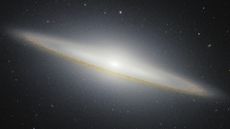 Space photo of the week: James Webb telescope takes best look at 'Sombrero Galaxy' in 244 years
New near-infrared observations by the James Webb Space Telescope highlight a tightly packed group of stars at the peculiar galaxy's center as well as dust on its outer fringes.
astronomy


